
Launch Your Own White Label Grocery Delivery App
Build your own white label grocery delivery app with clarity and control. Our white label grocery delivery app development helps businesses go live faster, manage operations with ease, and scale steadily, without heavy technical effort or long development cycles slowing progress.
Turn strategy into execution with a proven white label foundation. Build a grocery delivery app that fits your business model, reflects your brand, and scales as demand grows. Take the next step with clarity, confidence, and full ownership from day one.
Relied Upon by the World's Best Product Teams
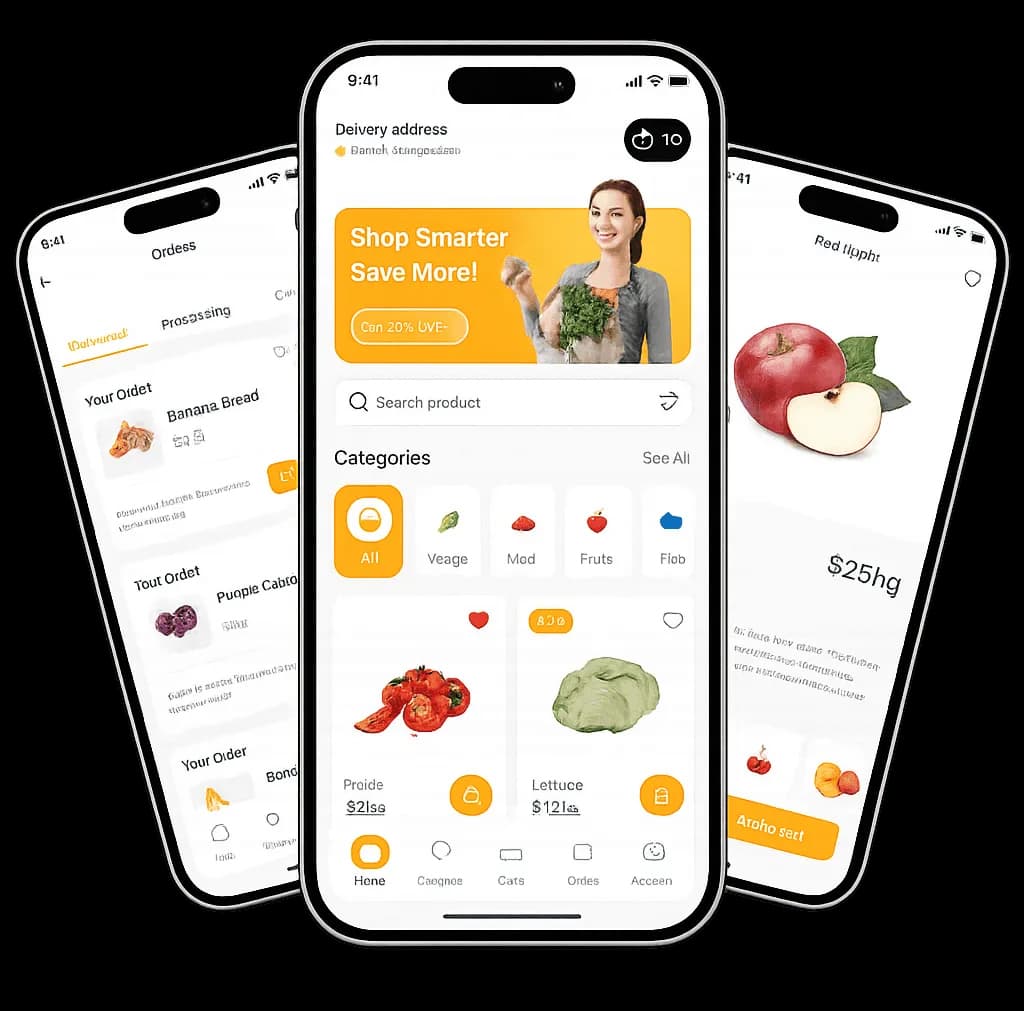
Grocery Businesses Scaling on a Proven Platform
5
Apps: Customer, Web, Driver, Store, Admin
7
Core System Integrations
100%
Brand & Data Ownership
9
Step Launch Roadmap
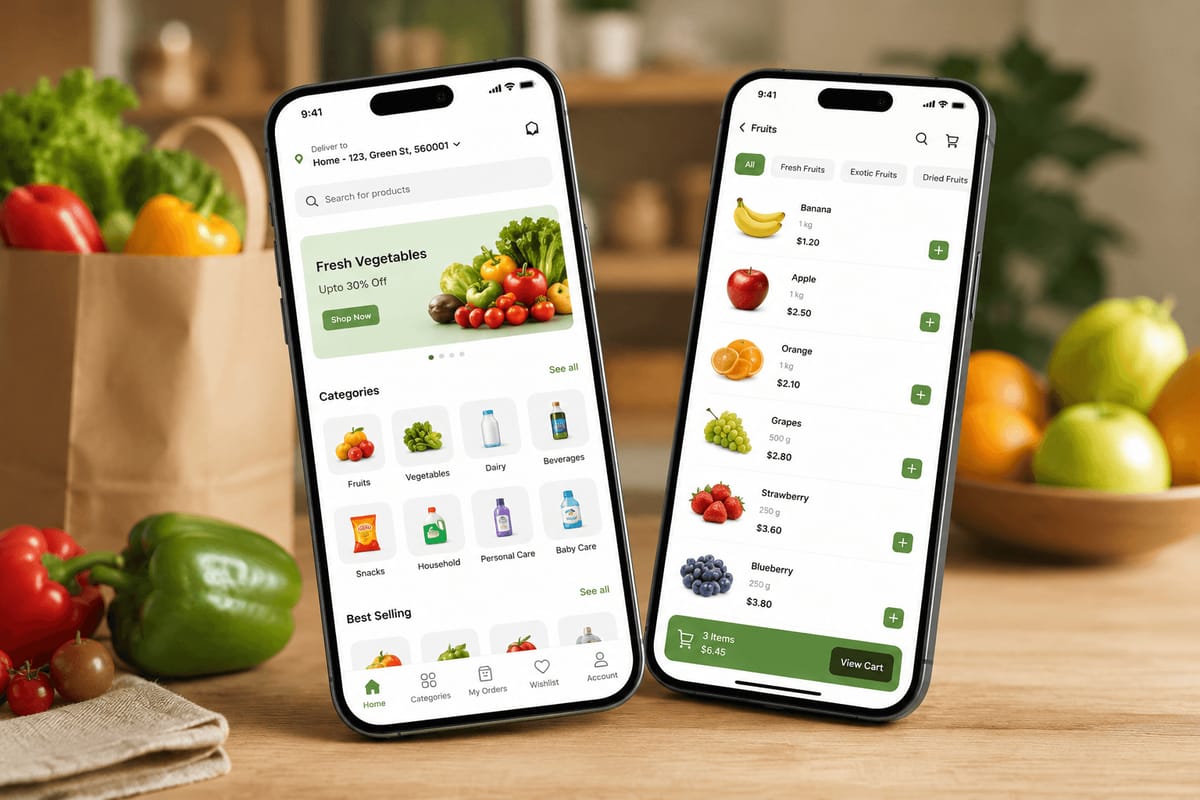
What Is a White Label Grocery Delivery App and Why Should Enterprises Invest in It?
A white label grocery delivery app is a ready-made platform that enterprises can brand as their own. It supports online ordering, delivery management, and customer engagement from day one.
Enterprises invest in it to reduce time, cost, and technical risk. Instead of building systems from scratch, teams focus on operations, partners, and growth.
The model offers full control over branding, data, and user experience. It also adapts easily to changing demand across cities or regions. For large businesses, this approach brings speed, stability, and long-term scalability without locking them into rigid technology choices.
Advanced Features of White Label Grocery Delivery App
The features we incorporate in the white label grocery app support smoother ordering, smarter operations, stronger control, and scalable growth across customer, driver, store, and admin workflow layers.
Easy Product Discovery
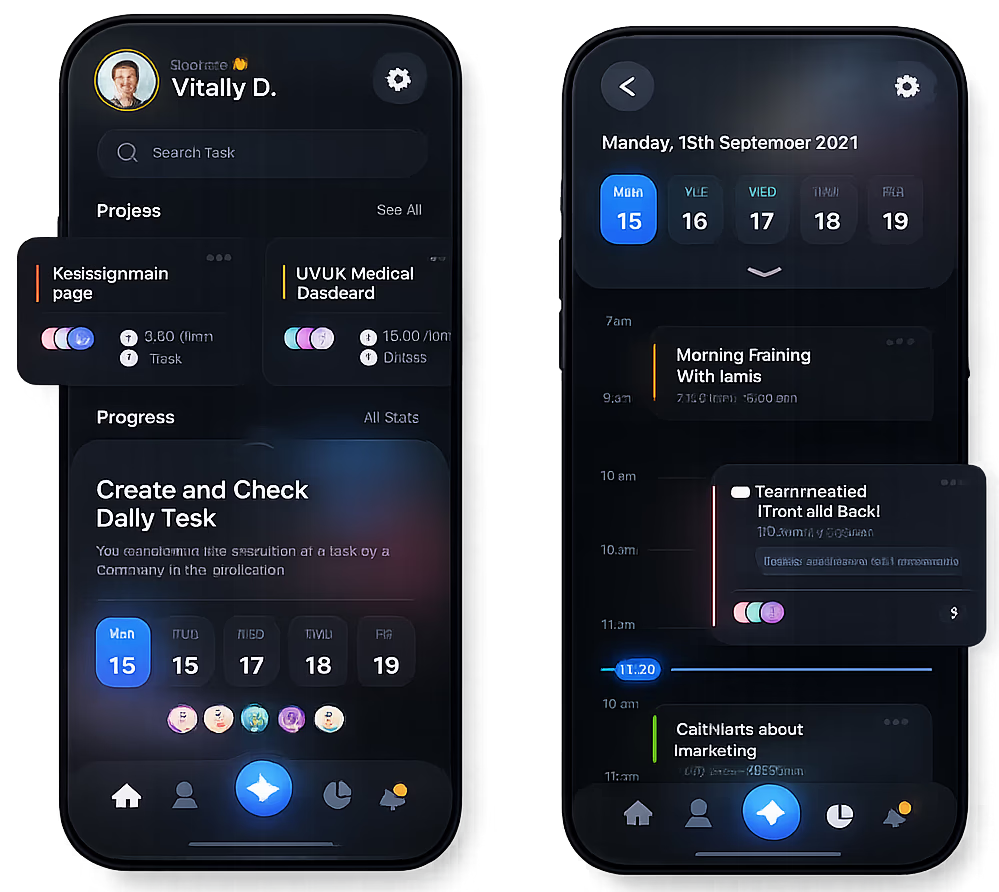
Every App Your Grocery Business Needs
Role-specific apps for customers, drivers, stores, and admins, all under your brand.
Build a Delivery Flow That Works in Real Life
Move from planning to execution with a white label grocery application built for real operations. Launch faster, stay in control, and scale confidently with a platform that supports growth without adding technical complexity.
From Idea to Launch: White Label Grocery Delivery App Roadmap
This roadmap shows how a white label grocery delivery app that we develop moves from planning to launch through structured steps that reduce risk and speed execution.
Business Requirements & Monetization Setup
Teams define goals, revenue models, and operational needs early to align the platform with real business outcomes.
White Label Feature Selection & Configuration
Required features get selected and configured based on workflows, market needs, and long-term growth plans.
Brand Customization & UI Setup
Visual identity, layouts, and interface elements adapt to reflect the brand and create a consistent user experience.
Backend & Admin Panel Configuration
Core systems, controls, and dashboards get configured to manage users, orders, stores, and operations efficiently.
User, Delivery & Store App Setup
Customer, driver, and store apps get prepared with role-specific features and clear operational flows.
Payment, Maps & API Integrations
Payments, location services, and third-party APIs connect smoothly to support transactions, tracking, and automation.
Security & Performance Optimization
The system strengthens data protection, improves load handling, and ensures stable performance under real usage conditions.
QA Testing & App Store Readiness
Teams test features, fix issues, and prepare builds to meet platform guidelines and quality standards.
Launch Support & Team Training
Support teams assist during launch while stakeholders learn platform operations, controls, and daily workflows.
Core System Integrations for White Label Grocery Apps
An on-demand white label grocery app relies on connected systems that keep payments, inventory, orders, and delivery aligned across the platform.
Inventory & Catalog Sync
Live syncing keeps product listings, prices, and stock levels accurate across stores, apps, and customer touchpoints.
Payment Gateway Integration
Payment gateways support secure transactions, multiple payment options, and quick confirmations that keep checkout smooth for customers and businesses.
Order Management System
A centralized system tracks every order step, coordinates actions, and keeps stores, drivers, and internal teams aligned.
Delivery & Logistics APIs
Logistics APIs manage routing, driver assignment, and tracking, helping deliveries move efficiently from pickup to completion.
Analytics & Reporting Tools
Clear reports reveal usage trends, operational performance, and growth opportunities that support informed business decisions.
Push Notification Service
Timely notifications update users at each stage, reduce confusion, and limit unnecessary support interactions.
User Authentication System
Secure login systems manage access, protect user accounts, and maintain data integrity across all platform layers.
Why CloneAppz Is the Best Choice for Your White Label Grocery Delivery App
CloneAppz builds a white label grocery delivery app focused on performance, scalability, and long-term reliability for growing businesses.
Microservices-Based Architecture
Modular services keep systems stable, simplify upgrades, and allow scaling without interrupting live business operations.
API-First, Integration-Ready Design
An API-first approach simplifies integrations with payments, logistics, analytics, and future third-party business tools.
Cloud-Native Auto-Scaling
Cloud-native setup adjusts resources automatically, handling demand spikes smoothly without manual intervention or downtime.
Real-Time Data Synchronization
Accurate stock and order status across every app and store.
Secure RBAC and Authentication
Role-based access ensures secure data handling while giving teams only the permissions they need.
High-Performance Caching & DB Optimization
Optimized databases and caching layers improve speed, reduce load, and support high traffic volumes reliably.
CI/CD-Enabled Rapid Deployments
Automated deployment pipelines speed up releases, reduce errors, and support continuous platform improvements safely.
Multiple Payment Choices for Smooth Checkout
Every grocery order is paid, confirmed, and recorded inside the platform, so customers check out quickly and stores, drivers, and admins see the same numbers.
Cards, wallets, and preferred local payment methods.
Instant transaction records shared with stores and admins.
Payment processing margins as an added revenue stream.
Launch your app for less, with support built in
Get up to 20% off your white label or clone app, plus 3 months of free maintenance after launch. Tell us about your idea and we'll send a free estimate within 24 hours.
Limited-time offer. Discount depends on scope; maintenance is included with every product.
- Up to 20% off
- 3 months free maintenance
- Free live demo
- Free estimate in 24h
How a White Label Grocery Application Works?
Our white label grocery application runs on a simple flow that connects ordering, inventory, payments, and delivery into one coordinated process.
User Places an Order
The user browses products, selects items, chooses delivery details, and confirms the order through the app or website.
Store Processes the Order
The store receives the order, picks items, packs them carefully, and updates the order status in real time.
Delivery Is Assigned
The platform assigns a nearby delivery partner based on location, availability, and delivery timelines.
System Verifies Inventory
The system checks live inventory, confirms availability, and prevents out-of-stock items from entering the order flow.
Payment Is Completed
The customer completes payment securely, and the system records the transaction instantly for all stakeholders.
Order Is Delivered
The delivery partner completes the drop, updates the status, and closes the order cycle smoothly.
Plan Your White Label Grocery App with Confidence
Bring your roadmap to life with a platform designed for real scale. Get expert guidance, clear execution, and a white label grocery delivery app that supports growth from launch to long-term operations, without unnecessary complexity.
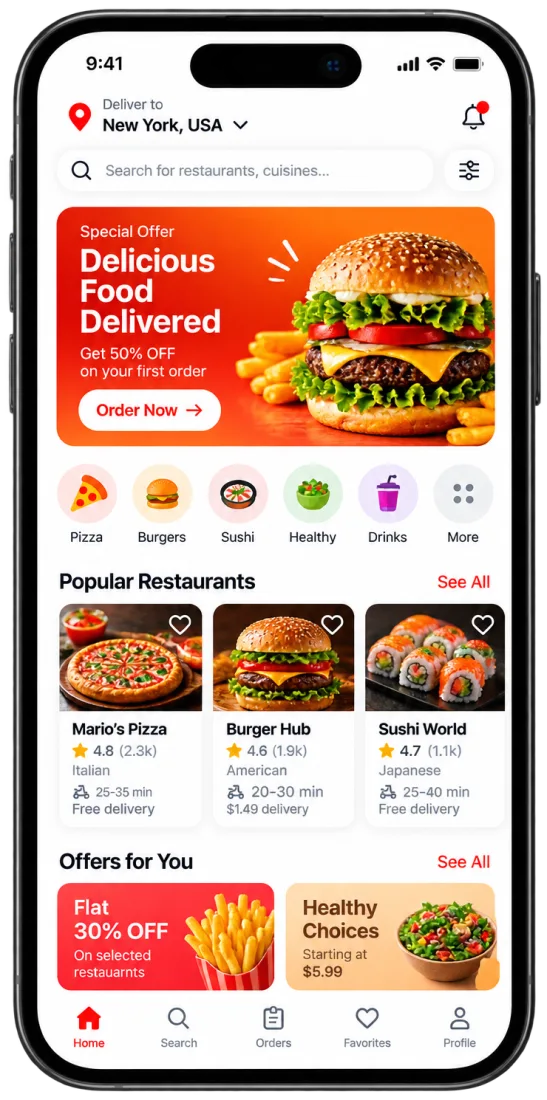
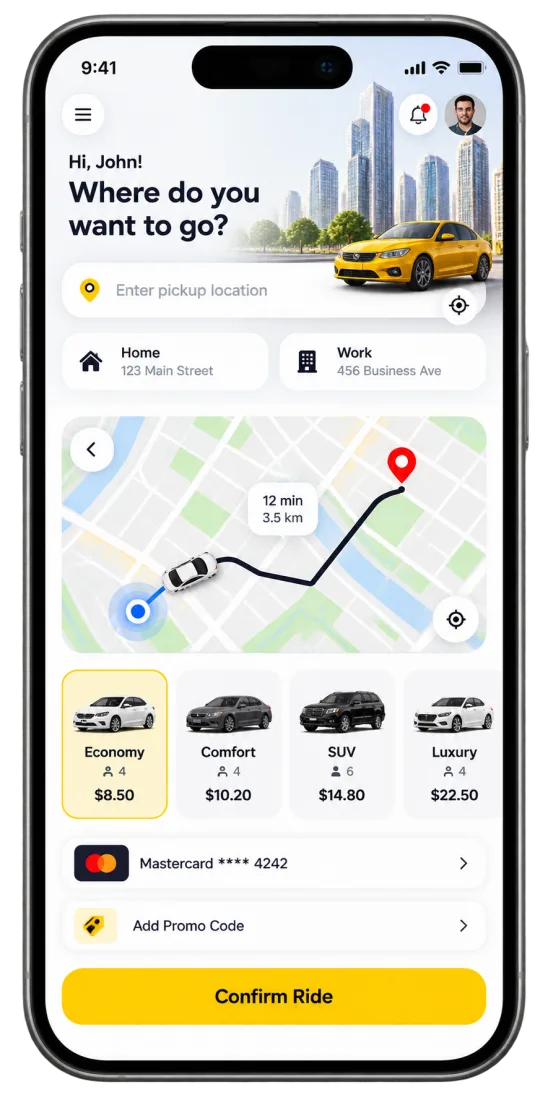
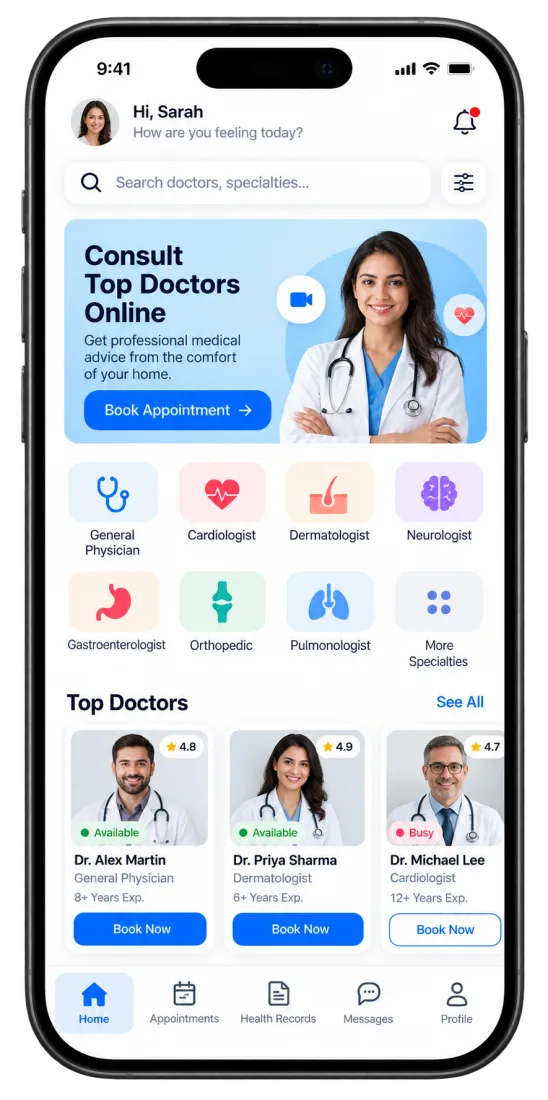
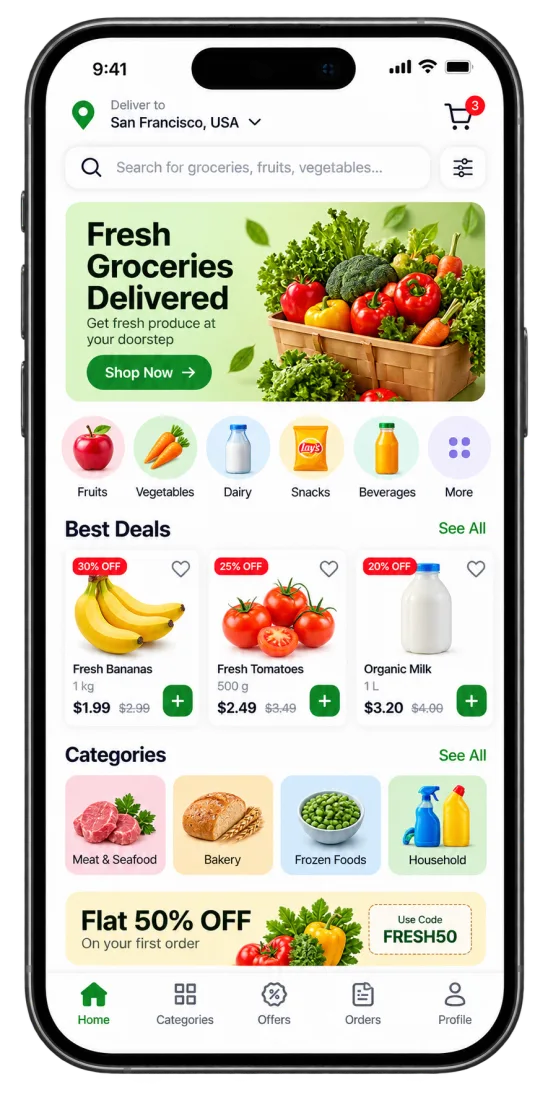
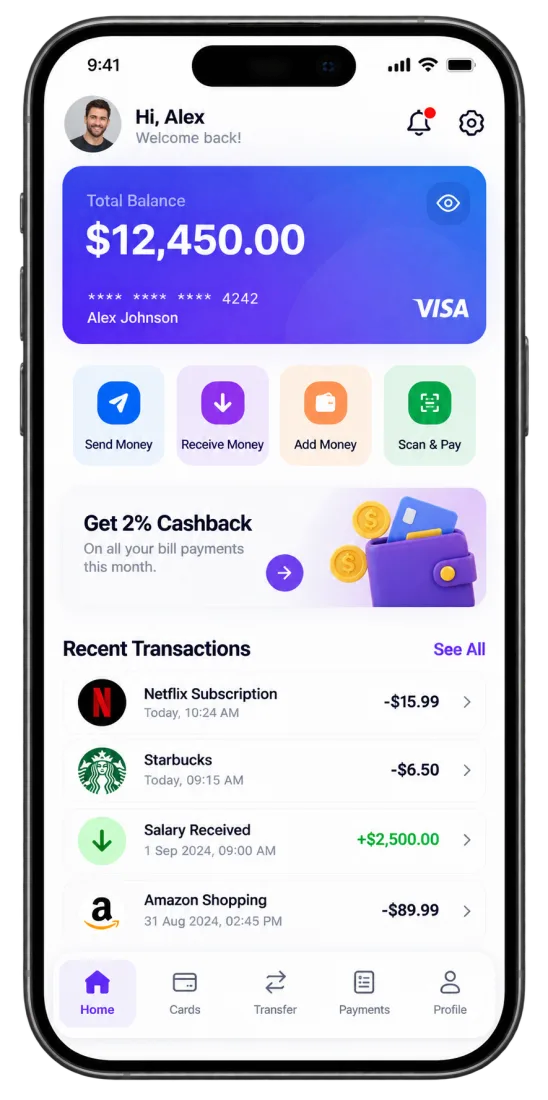
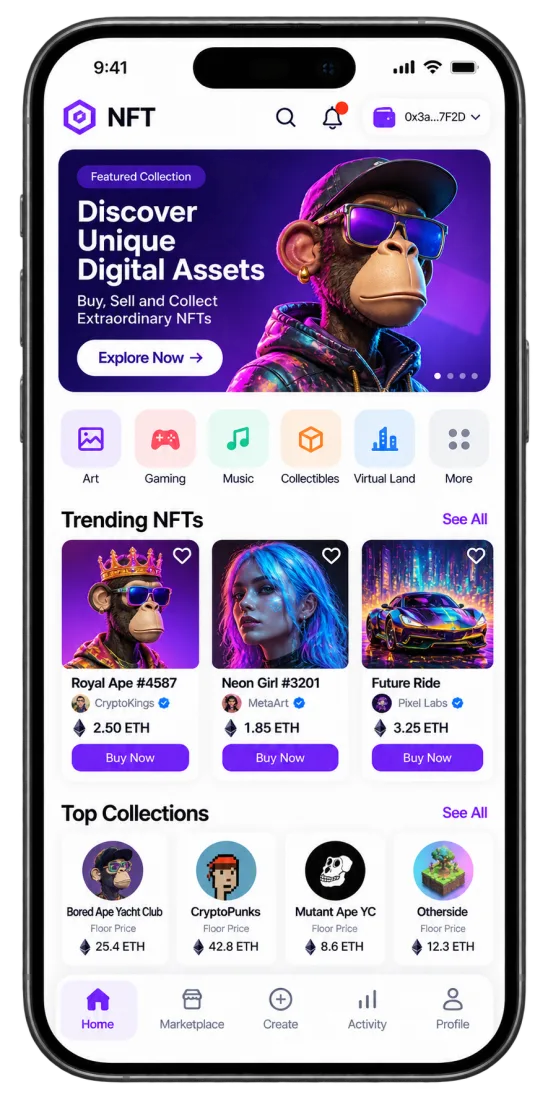
Explore the Screens of Our Grocery Delivery App
See how customers, stores, and drivers move through a smooth, branded grocery experience.
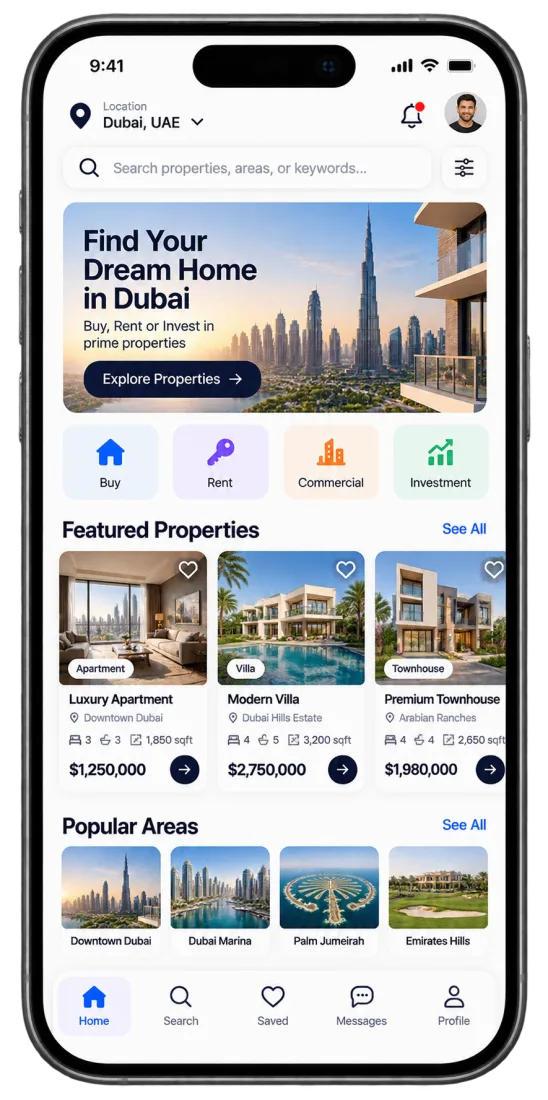
Benefits of a White Label Grocery Ordering App
A white label grocery ordering app gives businesses a faster way to launch, stay in control, reduce costs, and scale operations without building technology from the ground up.
Faster Time to Market
Ready infrastructure shortens launch timelines. Teams enter markets earlier, validate demand faster, and adjust strategy without long development delays.
Lower Development Costs
Prebuilt systems reduce engineering spend. Businesses avoid repeated maintenance costs and redirect budgets toward growth and customer acquisition.
Complete Brand Ownership
The platform carries your brand across every touchpoint. Businesses retain control over identity, communication, and customer relationships at all stages.
Scalable Business Model
As demand grows, the system adapts. New regions, users, and workflows fit in without disturbing existing operations.
Customizable Features
Workflows, pricing rules, and delivery logic can be shaped around business needs without touching the core platform structure.
Improved Customer Experience
Smooth navigation, clear updates, and reliable delivery build trust. Customers know what to expect and return with confidence.
Multi-Vendor & Inventory Management
A white label grocery ordering app supports vendor onboarding, inventory tracking, stock visibility, and order routing through a single control layer.
Operational Efficiency
Automation reduces manual effort. Order handling, delivery assignment, and reporting become faster and more consistent across teams.
Data & Analytics Insights
Built-in insights highlight trends, gaps, and opportunities. Decisions rely on real usage patterns rather than assumptions.
Secure & Reliable Platform
Strong security practices and stable architecture protect data, maintain uptime, and support long-term operational confidence.
Easy Third-Party Integrations
The platform connects easily with payments, maps, and external tools, keeping the ecosystem flexible and future-ready.
Higher ROI & Revenue Growth
Faster launches and controlled costs improve margins. Businesses grow revenue steadily without increasing operational complexity.
Revenue Models for White Label Grocery App Businesses
Our white label grocery delivery app development supports multiple revenue streams that help businesses earn consistently while scaling operations and partner networks.
Commission per Transaction
The platform earns a commission on each completed order, creating reliable revenue that grows naturally with increasing order volumes.
Vendor Subscription Billing
Vendors pay recurring fees to operate on the platform, list products, and access customers without managing technical infrastructure.
Payment Processing Fees
A small margin on transactions adds consistent income while customers enjoy smooth and secure payment experiences.
Dynamic Delivery Pricing
Delivery charges adjust based on distance, demand, and time, helping balance operational costs and improve margins during peak hours.
Sponsored Listings
Vendors invest in visibility by promoting products or stores, gaining placement where customers make active purchase decisions.
Premium User Access
Subscription plans offer customers added benefits while generating recurring revenue without increasing delivery or operational load.
Revenue Tracking System
Centralized reports show earnings across channels, helping teams understand performance and plan growth with clarity.
Brand Partnerships
Featured campaigns with FMCG brands.
Scheduled Delivery Slots
Premium fees for priority time slots.
Bulk & Business Orders
Recurring supply for offices and kitchens.
Pricing
How much does a Grocery Delivery App cost?
Pricing depends on your platforms, features, and design. Most white label app projects start from the figure shown, and your free estimate gives you a fixed scope, timeline, and cost.
Starting from
$2,500
Fixed quote within 24 hours
- Up to 20% off
- 3 months free maintenance
- Free live demo
Technology Stack Behind Our Grocery Delivery Apps
Proven, scalable technologies for real-time inventory, payments, and delivery.
- Kotlin
- Swift
- JavaScript
- Python
- Java
- React Native
- Node.js
- React.js
- MongoDB
- PostgreSQL
- Redis
- Socket.io
- AWS
- Docker
- Stripe
- Google Maps
- Kotlin
- Swift
- JavaScript
- Python
- Java
- React Native
- Node.js
- React.js
- MongoDB
- PostgreSQL
- Redis
- Socket.io
- AWS
- Docker
- Stripe
- Google Maps













- MongoDB
- PostgreSQL
- Redis
- Socket.io
- AWS
- Docker
- Stripe
- Google Maps
- Kotlin
- Swift
- JavaScript
- Python
- Java
- React Native
- Node.js
- React.js
- MongoDB
- PostgreSQL
- Redis
- Socket.io
- AWS
- Docker
- Stripe
- Google Maps
- Kotlin
- Swift
- JavaScript
- Python
- Java
- React Native
- Node.js
- React.js
Free guide
The 2026 App Launch Playbook
Costs, timelines, and the launch checklist we use for every white label and clone app, in one practical guide.
- Real cost ranges by app type
- Week-by-week launch timeline
- Feature checklist for your MVP
- App store approval tips
Bonus: up to 20% off + 3 months free maintenance when you start a project.
Frequently Asked Questions
A white label grocery delivery app is a ready-built platform that businesses brand as their own. It supports ordering, delivery, and management without starting development from scratch.
Enterprises, retailers, startups, and aggregators benefit most. It suits businesses that want faster market entry while keeping control over branding, data, and operations.
Launch timelines stay much shorter than custom builds. Most platforms go live within weeks, depending on customization, integrations, and testing scope.
Yes. The architecture supports multi-region operations, vendor expansion, and growing order volumes without disrupting existing workflows or performance.
Businesses retain control over branding, customer data, and operational settings. This ensures flexibility and independence as the business grows.
Revenue comes from commissions, vendor subscriptions, delivery fees, sponsored listings, and premium user plans, depending on the chosen business model.
Explore related solutions
More ways to launch alongside your Grocery Delivery App.
Related solutions