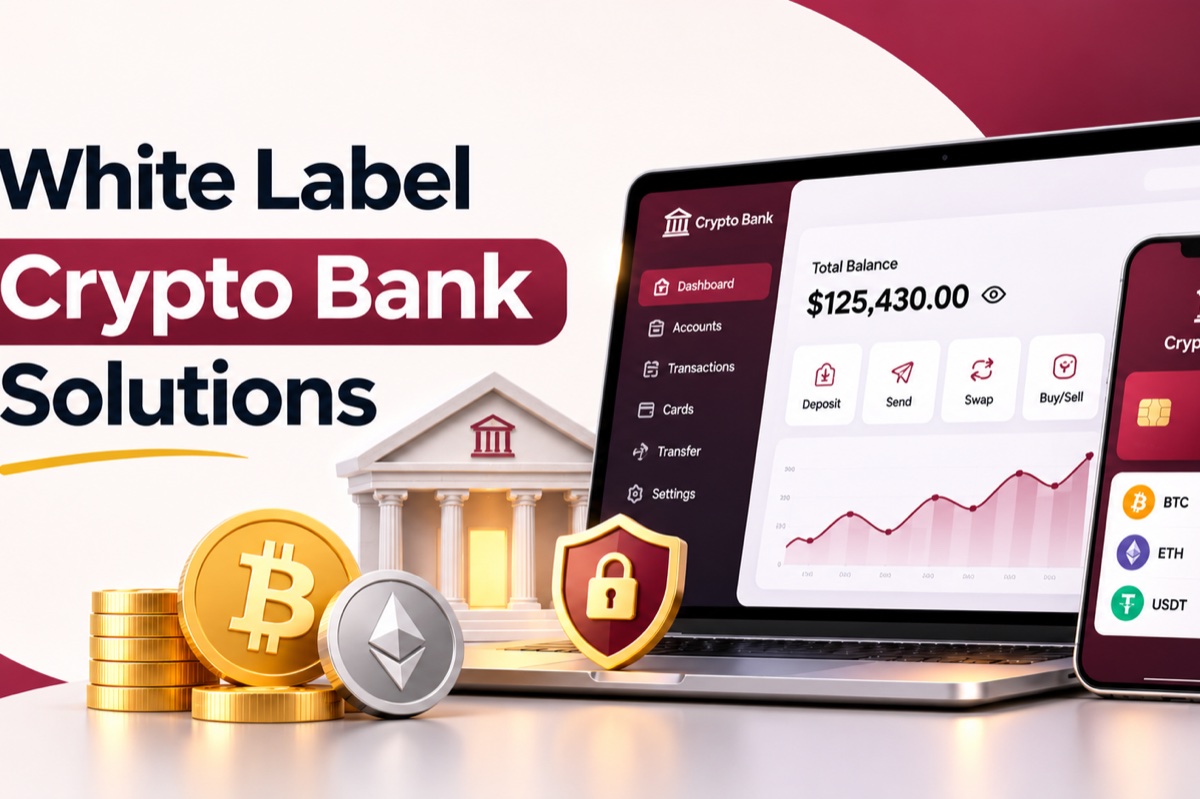
White Label Trading Platform: A Guide for Brokers
Planning to launch a brokerage? See how a white-label trading platform works, what it costs, and how to choose a professional app development company.
By CloneAppz Team12 min read
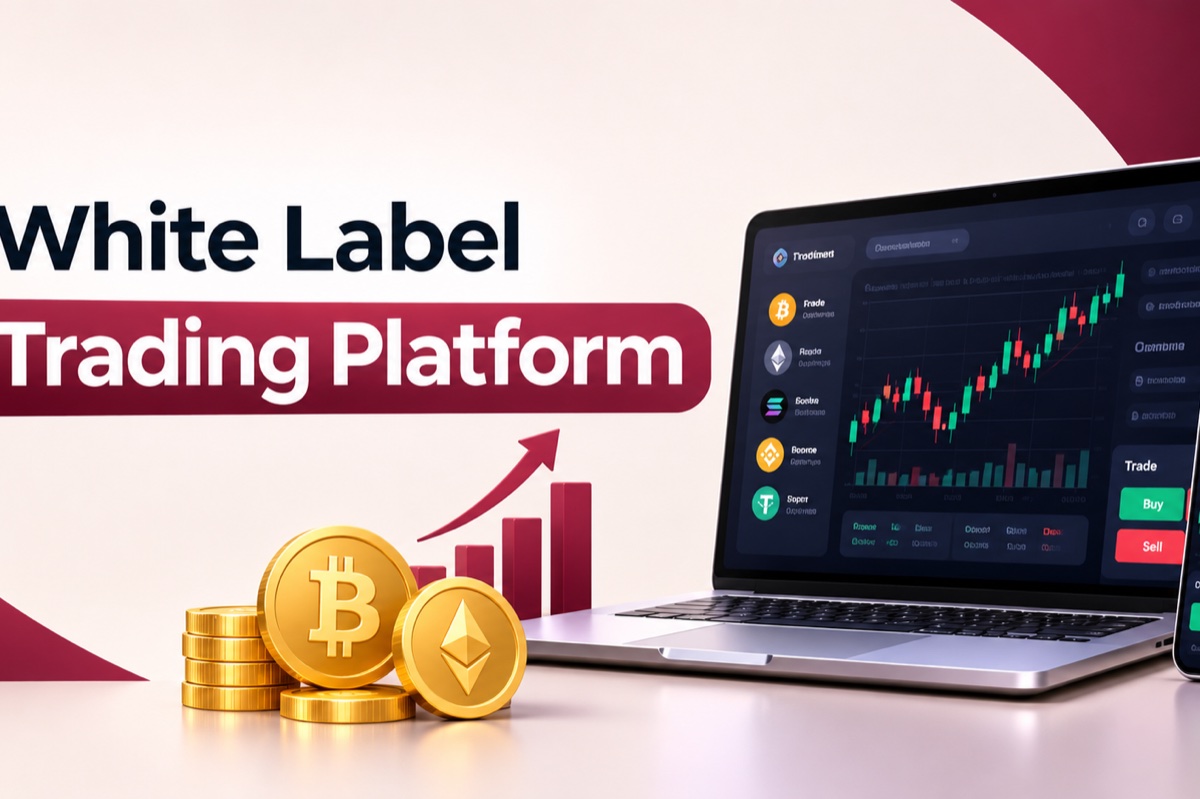
Getting a broker licence takes months. Building trading software from scratch takes even longer. As a result, many new brokers now pick a white label trading platform instead.
In simple words, it is ready-made trading software that you launch under your own brand. Your clients see your logo, your colours and your name, and the technology provider runs the engine quietly in the background.
This guide explains how the model works, what it costs and how to pick a provider. We also look at stocks, forex and futures one by one, because each market asks for different things. By the end, you will know what to ask before you sign anything.
What is a White Label Trading Platform?
Think of store-brand cereal. One factory makes it, but the box carries the shop's name. A white label trading platform works the same way. One company builds the technology, and another sells it as its own.
How the White Label Model Works
A technology company builds the full trading system. It then licenses that system to a broker, and the broker adds its own branding and sells trading services to its own clients.
Clients never see the provider's name. The broker owns the client relationship, sets the pricing and holds the licence. Meanwhile, the provider looks after hosting, updates and fixes.
The model is common in finance. According to its website, Saxo works with more than 150 banks and brokers on its white label offering. That tells you this is not a niche idea; it is how a large part of the industry runs.
What You Get Inside the Stack
A good platform is far more than a website with your logo on it. It has four working layers, and each one matters.
Trading Engine and Risk Controls
This is the brain of the platform. It takes orders, tracks positions and works out margins in real time. It also enforces risk limits. Given the complexity involved, building a trading back-end from scratch can take three to five years of dedicated development.
Web and Mobile Trading Apps
This is where your clients trade. Look for web, iOS and Android apps with charts, order tickets and watchlists. All of them should carry your brand.
Admin and Back-Office Tools
Your team lives here, and handles client accounts, fees, commissions, risk settings and reports. A weak back office slows down every other part of the business.
Liquidity and Market Data Connections
Prices and order flow come from outside the platform. So it must link to liquidity providers, exchanges and data vendors. Without those links, there is nothing to trade.
Build vs Buy: Why Brokers Choose a White Label Trading Platform
Every founder asks the same thing at some point. Why not build our own? The answer comes down to time, money and risk.
Speed to Market
A new broker can soft-launch a mature white label product in a few weeks with the assistance of a reliable white label app development company. In practical terms, every month without a platform is a month without revenue. Meanwhile, your rivals keep signing up traders.
Cost and Maintenance
We build a white label stock trading platform with a cost ranging between $5,000 and $35,000. White label licences often carry setup fees, plus monthly charges. Treat these as ballpark figures, not quotes. Still, they show the scale of the difference.
Costs do not stop at launch. Software needs patches, security tests and new features all the time. With a white label provider like CloneAppz, however, that work is spread across many clients, so you pay only a share.
Lower Technical Risk
A white label app development company gives you the assurance of lower technical risk, since its developers already understand, thanks to experience, what could go wrong and how to prevent it.
Brief Comparison
Here is a quick side-by-side view.
Build in-house | White label | |
Time to launch | Often a year or more | Often weeks to a few months |
Upfront cost | High | Lower |
Upkeep | Your own team | Shared with the provider |
Control over the roadmap | Full | Shared |
White Label Stock, Forex and Futures Trading Platforms Compared
Know the differences between white label stock, forex, and futures trading platforms to find the right features, tools, and pricing for your brokerage business.
White Label Stock Trading Platform
Stock traders expect an easy-to-use app and accurate market data. Our white label stock trading platform also handles important updates, such as dividend payments and stock splits. Accurate market prices are essential because delayed or incorrect data can quickly break clients' trust. Our platform helps you deliver reliable market information.
White Label Forex Trading Platform
Forex markets operate almost 24 hours a day, five days a week. Your white label forex trading platform must run smoothly during important events, such as interest rate announcements and jobs reports. It should also let you adjust leverage and manage spreads easily.
Managing risk is equally important. Some brokers use an A-book model, where they pass client trades to the market. Others use a B-book model, where they take the opposite side of a client's trade. Many brokers use a mix of both. Good software lets you set different rules for different groups of clients. It also helps you keep clear records to meet regulatory requirements.
White Label Futures Trading Platform
Futures trading comes with requirements that stocks and forex may not have. A white label futures trading platform must track the money traders need to open and maintain positions. It should also manage contract expiry dates, contract rollovers and access to exchange data. These features should be built into the platform from the start, not added later.
Clearing is another important factor. Most exchange-traded futures require a clearing arrangement to process and settle trades. Before choosing a provider, make sure its setup meets your business needs.
One Platform, Many Markets
Many clients now prefer trading different assets through a single platform. That is why brokers are adding more markets to their services, even if they started with forex. Indices, metals and energy products are common additions.
A multi-asset platform brings everything together. Your team can manage clients, handle daily operations and monitor risks from one place. Clients also get one login to access different markets, making trading simpler for everyone.
Asset class | Must-have | Watch out for |
Stocks | Corporate actions, reliable data | Market data costs |
Forex | Uptime, leverage controls, routing | Volatility spikes |
Futures | Margin, expiry handling, clearing | Exchange fees |
Who Uses a White Label Stock Trading Platform?
It is not only for start-ups. Different players use it for different reasons.
New Brokerages and Fintech Start-ups
These teams want to reach the market before their budget runs out. A white label platform lets them skip the build and focus on licences, partners and clients. For many, it is the only realistic path.
Established Brokers Adding Asset Classes
Imagine a forex broker that wants to offer stocks or futures. Rebuilding its core system would take years. A second white label platform lets it test the new market without touching the main one.
Prop Firms, Banks and Introducing Brokers
Prop firms need drawdown rules, challenge stages and payout tools. Banks want to give wealthy clients a branded way to trade. Introducing brokers want their own look, even when someone else runs the back end.
What is Inside CloneAppz's White Label Trading Platform?
Now that the basics are clear, let us look at what we build. Our white label trading platform is made for brokers who want to launch fast without giving up control.
Core Trading Modules for Stocks, Forex and Futures
You can offer one market or several. The platform supports stock, forex and futures trading with real-time order handling, margin tracking and risk controls. You choose the instruments, and set the rules.
Branding and Customization
Your clients should feel they are using your product, because they are. Logo, colours, domain and app design all follow your brand. Account types, fee plans and leverage settings can be set to match your business model.
Admin Panel, CRM and Reporting
Your team gets one place to manage clients, deposits, commissions and risk. Reports are ready for management and for audits, reducing operational complexity.
Integrations with Payments, KYC and Liquidity
A platform is only as useful as the services around it. We connect to payment gateways, identity checks and liquidity providers, so onboarding and funding stay smooth. If you already work with a specific vendor, tell us early.
Deployment and Support
We help with setup, testing and go-live. After launch, our team stays on hand for updates and fixes. You run the brokerage, while we keep the technology healthy.
Compliance, Security and Risk: What Regulators and Clients Expect
Technology cannot replace a licence. But the right platform makes compliance much easier. This is where many brokers feel the most pressure.
Audit Trails and Reporting
Regulators ask for proof. Look for logs of every configuration change, complaint tracking and ready-made reports.
- In the EU, ESMA leverage limits shape what you can offer retail clients.
- In the UK, the FCA sets standards for disclosures and best execution.
- In the United States, the NFA expects strict record-keeping.
Risk warnings matter too. Saxo's own site states that 66% of its retail CFD accounts lose money. So, clear, honest disclosures protect your clients and your business.
KYC, AML and Data Protection
Identity checks and anti-money laundering screening should be built into onboarding. Ask where client data is stored and who can see it. Ask for recent security test results as well.
Uptime and Execution Stability
A platform may run well on quiet days but struggle when markets get busy. Test it during peak hours; simulate a major news event and check how long orders take to process. This is useful advice for any buyer.
How Much Does a White Label Trading Platform Cost?
Honestly, it depends. Price changes with the asset classes you launch, the level of customization and your expected volume. But you can still plan, if you know what drives the bill.
What Drives the Price
The cost depends on how many markets you offer, how many tools you connect, and how much you customize the platform. Hosting and support also affect the price. A platform for one market usually costs less than one that supports multiple assets.
Licence, Revenue Share or One-Time Fee
Providers usually pick from three models. A fixed licence gives you predictable monthly costs. A revenue share lowers upfront spend, but you share income as you grow. A one-time fee suits teams that want long-term ownership.
There is no single best option. The right one depends on your cash flow and growth plans.
Hidden Costs to Plan For
The licence is only part of the story. There are others as well: market data, cloud hosting, disaster recovery, payment fees, KYC checks per user and engineering hours for custom links. Add these to your budget from day one.
Also ask about exit terms. If you ever switch providers, you want to take your data with you.
How to Choose the Right Provider: A Seven-Point Checklist
Providers can look alike on a sales page. This checklist helps you tell them apart.
- Asset coverage: Does it support stocks, forex and futures, now and later?
- What is included: Are the CRM, back office and reporting part of the package?
- Integrations: Does it connect to the payment, KYC and liquidity partners you need?
- Compliance tools: Can it produce audit logs and reports regulators expect?
- Customisation: Can you change branding, fees and account rules without a long wait?
- Support: Who answers when something breaks at 2 a.m.?
- Track record: How many brokers use it, and for how long?
Ask to see the platform running, not just a slide deck. A live demo tells you more than a brochure.
Your Launch Roadmap: From Idea to First Trade
A clear plan keeps the launch calm. Here is a simple path that many brokers follow.
Plan and Choose Your Markets
Start with your clients. Who are they, and what do they want to trade? Pick one or two markets to begin with, then add more once things run well.
Customize and Integrate
Set up your branding, account types and fees. Connect payments, KYC and liquidity. Keep a written log of every setting, because auditors will ask for it.
Test, Train and Go Live
Run a pilot with a small group first. Set a cohort of 500 to 1,000 clients that mirrors your real risk profile. Train your support and dealing staff at the same time. Many failed launches come from untrained teams, not bad software.
Start Your Brokerage on a Platform Built to Scale
A white label stock trading platform will not do the hard work of running a brokerage for you. But it removes the slowest, costliest part: the technology. That leaves you free to focus on clients, compliance and growth.
Whether you start with stocks, forex or futures, the same rule applies. Pick a partner you trust, test it under pressure and launch in steps.
Frequently Asked Questions
01What is a white label trading platform?
It is ready-made trading software that a broker licenses and sells under its own brand. The provider builds and maintains the technology. The broker handles clients, pricing and the licence.
02How does a white label trading platform work?
The provider hosts and runs the trading engine, apps and back office. You add your branding and connect your payment and liquidity partners. Your clients trade on what looks like your own product.
03How much does a white label trading platform cost?
It varies by markets, customisation and volume. Some vendors quote setup fees in the tens of thousands of dollars plus monthly charges. Others use revenue share. Always ask for a full rate card.
04How long does it take to launch a white label trading platform?
Some providers say six to ten weeks for a focused scope. Complex setups with many integrations take longer. Remember that licensing runs on its own timeline.
05Do I need a licence to run a white label trading platform?
In most places, yes. The platform is technology, not a licence. The broker must hold the right authorisation in its region, so speak to a legal adviser early.
06Can one white label platform support stocks, forex and futures?
Yes, if it is a true multi-asset system. Check that each market works natively, with the right margin, data and clearing features. Do not accept add-ons that feel bolted on.
07What is the difference between a white label and a turnkey trading platform?
The terms overlap. White label stresses branding under your name. Turnkey stresses a ready-to-run package. Many providers offer both in one product.
08What is the best white label forex trading platform for a new broker?
There is no single winner. The best fit has stable execution, a built-in CRM, strong risk tools and fair pricing. Shortlist two or three providers and test each with a live demo.