White Label Game App: A Practical Guide to Launching Your Own Gaming Platform
Launch your branded gaming platform quickly with a ready-to-deploy white label game app featuring secure payments, admin control, and Android & iOS support.
By CloneAppz Team11 min read
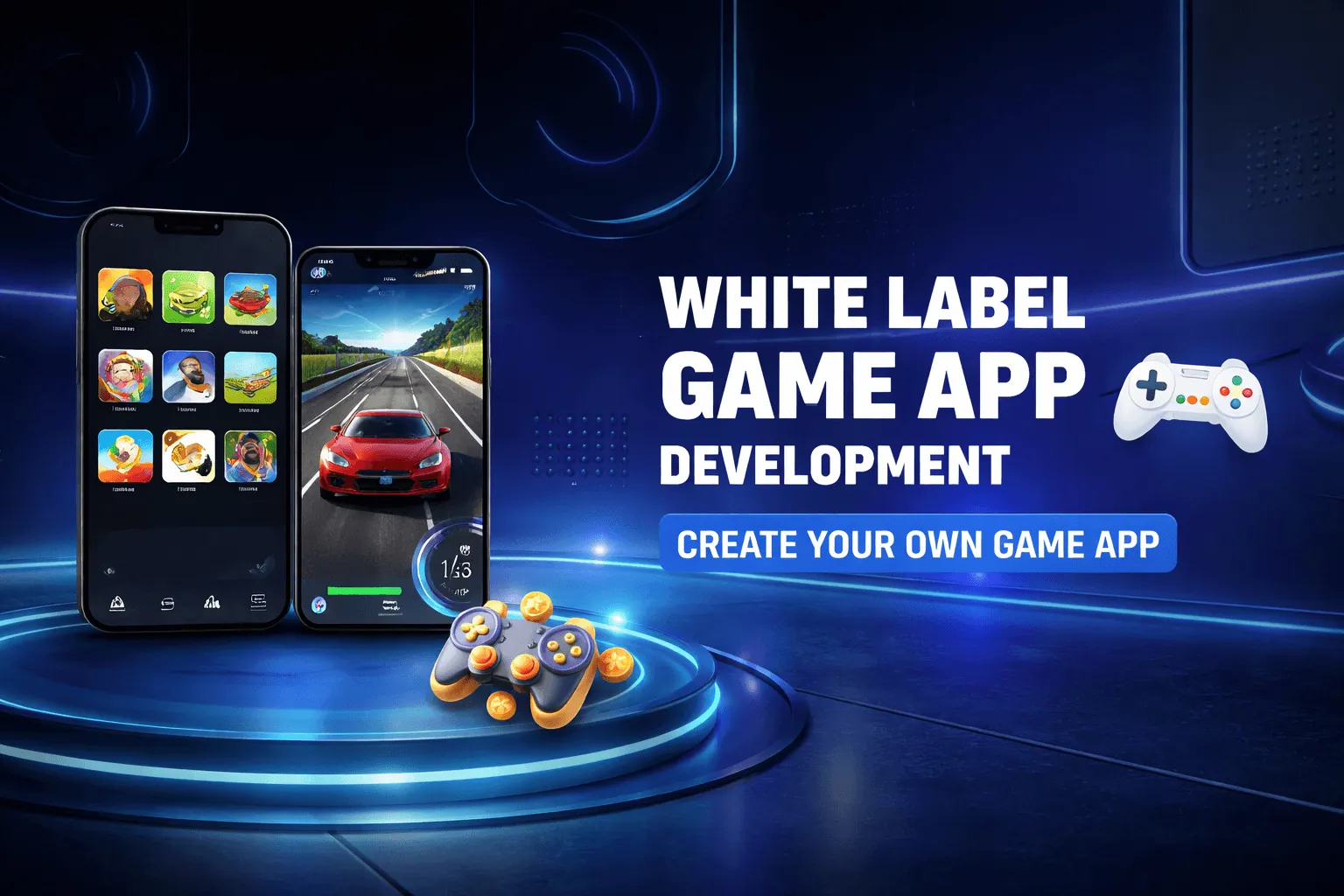
The gaming market moves fast. New apps appear every week, user expectations grow, and the competition tightens. Many founders enter this space with strong ambition but limited technical resources. They want to launch quickly, want predictable costs, and a system that works from day one.
This is where a white label game app becomes relevant.
It offers structure and reduces uncertainty. It allows you to focus on business instead of code.
This guide explains how white label game apps work, what they cost, how Android and iOS deployment differs, and how to evaluate a white label game platform before investing.
Let us break it down clearly.
Understanding the White Label Game App
A white label game app is a pre-built gaming solution developed by a specialized company. The core system already exists, the backend works, the game engine runs, payment systems integrate, and admin controls operate.
You customize the branding, add your logo, define colors, themes, and business rules. Then you launch it under your company name.
This model differs from traditional development.
When companies build from scratch, they design game logic, backend architecture, security layers, testing protocols, and infrastructure one step at a time. That process demands months of effort and a full technical team.
White label game apps remove that complexity. You adopt a tested framework and deploy it with controlled customization.
Many businesses today rely on white label app games because the risk of early technical failure decreases significantly. The system has already undergone debugging, optimization, and real-world usage.
Why White Label Mobile Games Growing in Demand?
The global mobile gaming industry continues to expand. Smartphones are becoming more affordable and internet adoption improves every year. Casual gaming attracts users across age groups.
Entrepreneurs see opportunity. But they also see barriers. Building a mobile game from scratch often requires:
- A game designer
- Backend developers
- Mobile engineers
- QA testers
- UI/UX specialists
- DevOps support
The cost rises quickly and timelines stretch. Market conditions change during development. A white label mobile game app reduces this friction.
Instead of assembling a large development team, businesses license white label mobile games that already function. They focus on marketing, partnerships, and user acquisition. Hence, speed becomes an advantage.
Launching early allows you to test user behavior, validate revenue models, and refine strategy before competitors dominate your niche.
How White Label Gaming App Development Works?
Understanding the structure behind white label gaming app development helps you make better decisions.
The process usually follows four stages.
1. Selecting the White Label Game Platform
A white label game platform acts as the foundation. It includes:
- Core game engine
- Backend server setup
- Admin dashboard
- Wallet integration
- Reporting tools
Some platforms offer a single game module, while others provide multi-game ecosystems.
Before selection, clarity matters. Are you launching a skill-based game, trivia app, fantasy sports platform, or arcade model? The platform must align with your monetization goals.
2. Customization and Branding
This stage personalizes the system which includes:
- Logo integration
- Theme colors
- Interface layout adjustments
- Splash screens
- User onboarding flow
Advanced providers may allow feature-level customization. However, structural game mechanics remain consistent because they form the licensed framework.
A balanced approach works best. Over-customization increases cost and complexity. Strategic branding creates identity without breaking system stability.
3. Integration and Testing
Once branding completes, integration begins. This includes:
- Payment gateway setup
- SMS or email authentication
- Push notification configuration
- Analytics tools
- Third-party APIs
Testing& QA follows immediately, ensuring:
- Transactions process correctly
- Games run smoothly
- Admin reporting functions accurately
- Security protocols operate without vulnerability
Professional providers conduct internal testing before delivering the app. Independent testing adds another layer of confidence.
4. Deployment on Android and iOS
After validation, deployment begins. A White label game app for android requires:
- Google Play Console setup
- Compliance with Play Store policies
- APK or AAB packaging
- Device optimization
And, a white label game app iOS requires:
- Apple Developer account
- App Store compliance review
- iOS security alignment
- Certificate configuration
iOS approval often takes longer, whereas Android deployment moves faster but demands compatibility across diverse devices. Many businesses launch on Android first to test performance. Then they expand to iOS once metrics stabilize.
Key Features of a Readymade Game App
Let’s check the essential features of a white label game app. A professional readymade game app includes two core panels.
User Panel Features
Users typically access:
- Easy registration
- Wallet balance management
- Game lobby
- Real-time score tracking
- Transaction history
- Customer support interface
Admin Panel Features
Business owners or admins can control:
- User management
- Revenue tracking
- Withdrawal approvals
- Game settings
- Promotional offers
- Data analytics
The admin dashboard becomes the operational backbone. Without a strong backend interface, scaling becomes difficult.
Security and Compliance
Gaming platforms must prioritize:
- Encrypted transactions
- Fraud detection systems
- Secure authentication
- Data protection compliance
- Hosting architecture
- Data encryption standards
- Audit logs
Benefits of Choosing White Label Game Apps
Let us examine practical advantages.
Faster Time to Market
Time matters in competitive markets, and gaming is highly competitive. Custom development may take 9 to 18 months. White label deployment can occur within weeks.
Lower Initial Investment
A white label model removes the need to hire full-time development teams. Licensing fees often cost significantly less than custom engineering.
Proven Technical Framework
White label game apps operate on tested codebases with fewer bugs and higher stability.
Extensive Scalability
Most white label mobile game apps support modular expansion. You can add new game categories within the same ecosystem.
Reduced Technical Risk
Technical failures harm reputation. Using a stable framework reduces early-stage risk.
White Label Game App for Android vs iOS
Platform choice shapes growth.
Android Advantage
Android dominates global smartphone share. In many emerging markets, it controls over 70 percent of users.
A white label game app for android often benefits from:
- Larger audience reach
- Faster store approvals
- Lower entry barriers
However, Android requires device optimization across multiple screen sizes.
iOS Advantage
iOS users typically show higher spending patterns. A white label game app ios benefits from:
- Higher average revenue per user
- Stronger device consistency
- Strict security environment
Should you launch on both? Yes, but only when the budget allows. Launching on both platforms increases reach and brand credibility. However, many startups begin with one platform to manage cost.
White Label Gaming App Cost: What Influences Pricing?
The white label gaming app cost varies significantly. The following are the several factors that determine final pricing.
Type of Game
Skill-based games cost less than advanced real-money casino systems. On the other hand, multiplayer engines increase cost.
Feature Complexity
The more complex the features are to incorporate, the costlier it becomes. Complex features such as live tournaments, leaderboard systems, referral modules, and reward systems add to pricing.
Platform Coverage
Android-only deployment costs less than combined Android and iOS builds.
Customization Level
Basic branding costs less, whereas, the structural UI changes increase development hours and the cost.
Licensing and Maintenance
Some providers charge:
- One-time license fees
- Annual renewal charges
- Revenue-sharing models
- Ongoing maintenance costs
Marketing and Operational Expenses
Such expenses remain separate from the core white label game app design and development. Hence it becomes important to always request a detailed cost breakdown.
White Label Game Platform vs Custom Development
Choosing between white label gaming platform and customized development is crucial as this decision shapes long-term strategy.
Factor | White Label Game App | Custom Game Development |
Development Time | 2 to 8 weeks in most cases. With core engine already built, the deployment is fast | 6 months to 24+ months depending on complexity. Full architecture built from scratch. |
Initial Budget | Lower upfront investment. Predictable licensing or setup fee. | High upfront engineering cost. Hiring developers, designers, testers increases expense. |
Ongoing Costs | Annual license, maintenance, or revenue share may apply. Server costs separate. | Continuous developer salaries, infrastructure, updates, security patches required. |
Technical Ownership | Licensed framework. Core source code is usually controlled by the provider. | Full ownership of codebase, architecture, and IP. |
Customization Scope | UI, branding, payment integration, basic feature adjustments. | Complete control over mechanics, UI, backend logic, infrastructure, and feature roadmap. |
Scalability | Scalable within provider’s framework limits. Adding modules may depend on the vendor. | Fully scalable based on internal engineering decisions. No vendor dependency. |
Time to Market | Rapid market entry. Suitable for testing business models. | Slower entry. Suitable for long-term product innovation. |
Technical Risk | Lower early-stage risk. The pre-tested system reduces bugs. | Higher initial risk. Stability depends on development quality. |
Maintenance Responsibility | Shared or handled by the vendor depending on the contract. | Fully managed by an internal team. |
Security Control | Security managed at framework level by provider. | Complete control over security architecture and data policies. |
Competitive Differentiation | Limited differentiation if competitors use a similar platform. | High differentiation potential due to unique mechanics and design. |
Long-Term Strategy Fit | Ideal for startups and quick revenue models. | Ideal for companies building proprietary gaming ecosystems. |
If you aim to test a business model, white label works well. If you aim to build a unique intellectual property with proprietary mechanics, custom development may justify investment.
Who Should Invest in a White Label Mobile Game App?
White label models suit:
- Startups testing gaming ideas
- Entrepreneurs entering skill-based gaming
- Media companies building gaming communities
- Influencers expanding digital brands
- Businesses seeking quick monetization channels
If speed, predictability, and controlled cost matter, a white label mobile game app becomes practical. If complete architectural ownership matters more than speed, custom development may suit better.
How to Choose the Right White Label Gaming App Development Partner?
Choosing the provider requires evaluation beyond price. When selecting a partner, it is important to work with an experienced company like CloneAppz, a leading white label mobile game app provider.
- Hosting infrastructure
- Server scalability
- Code maintenance
- Security standards
Upon clarity, request a functional live demo and check for system’s stability, loading speed, transaction flow, and admin reporting.
Afterwards, understand licensing terms and get clarification on the following points–
- Is the license lifetime or annual?
- Are there revenue-sharing clauses?
- What support duration is included?
The provider that you choose must provide an accessible post-launch support. So, always ask for the provision of constant maintenance to keep the platform secure.
In the end, verify if your shortlisted supplier of white label game apps has compliance knowledge or not. This is extremely crucial to check as the gaming regulations vary across regions and the providers must understand platform policies and local legal frameworks.
Final Thoughts
A white label game app offers structure for entrepreneurs who want to enter the gaming market without long development cycles. It reduces uncertainty, controls cost, and accelerates launch. However, success depends on: clear business strategy, thoughtful platform selection, responsible cost evaluation, and ongoing marketing effort
White label solutions do not eliminate competition. They simplify entry.
If your goal involves testing a gaming idea, building audience engagement, or launching quickly with controlled investment, a white label game platform provides a strong starting point.
The decision should not focus only on speed. It should focus on alignment between your long-term vision and the platform you choose. Clarity before commitment always saves cost later.
Frequently Asked Questions
01What are white-label mobile game apps?
White label mobile game apps are pre-built gaming solutions that come ready to launch. A specialized company develops the core system, tests it thoroughly, and makes it available for licensing. You customize the branding, add your logo, and launch it under your business name. The white label game platform includes the game engine, backend, payment systems, and admin controls that already work. Whether you need a white label game app for android or white label game app ios, the system has already been tested in real-world conditions.
02How much does a white-label gaming app cost?
The cost varies based on several factors. A basic skill-based game costs less than advanced multiplayer systems. Some providers offer limited white label game app free trials, but full deployment requires investment. Platform choice matters, white label android games typically cost less than combined Android and iOS builds. Customization level affects pricing as well. Most providers charge through one-time license fees, annual renewals, or revenue-sharing models.
03How to make money with white-label game apps?
Monetization happens through multiple channels. In-app purchases work well where users buy virtual goods or premium features through your white label game portal. Advertising revenue comes from display ads, video ads, or rewarded ads. Tournament entry fees generate revenue in skill-based games, while commission on transactions works for real-money platforms. Whether you launch white label ios games or white label android games, combining several monetization models maximizes earnings.
04What are the essential features of a white label game platform?
A solid white label game platform includes two main panels. The user panel offers easy registration, wallet management, game lobby access, and real-time score tracking. The admin panel gives you control over user management, revenue tracking, withdrawal approvals, and game settings. Security features matter just as much. Look for encrypted transactions, fraud detection systems, and secure authentication. A strong white label game portal with robust admin controls becomes your operational backbone for scaling effectively.
05How to choose between in-house development and white label mobile game app development?
Start by evaluating your timeline and budget. White label game platform deployment takes weeks, while custom development stretches from six months to over two years. White label game app download and deployment costs significantly less upfront. Consider your long-term vision. If you want complete ownership of unique mechanics, custom development makes sense. But if you need a functional white label game portal to enter the market fast, white label provides a practical starting point.
06What are the characteristics of a professional white label gaming app development company?
A professional provider demonstrates technical transparency. They clearly explain hosting infrastructure, server scalability, and security standards for their white label game platform. They offer live demos so you can test system stability before committing. Look for accessible post-launch support that covers both white label game app ios and white label game app for android deployments. Professional providers understand platform policies for white label android games and white label ios games across different regions.