Contact Us
Blogs

Netflix Clone App Development: Launch OTT Streaming Platform
Create an OTT streaming platform with Netflix clone script. Explore features, monetization models, technology stack, and development cost.
Mobile App
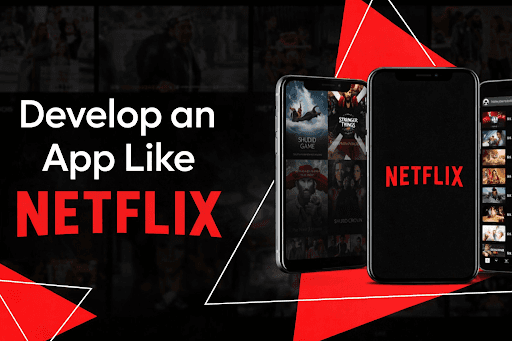
The global entertainment industry has experienced a massive shift from traditional television to on-demand video streaming platforms. Consumers now expect instant access to movies, TV shows, documentaries, and exclusive content across multiple devices. Platforms like Netflix have revolutionized how audiences consume entertainment by offering seamless streaming experiences, personalized recommendations, and massive content libraries.
This growing demand has created an opportunity for startups, media companies, and entrepreneurs to build an app like Netflix and enter the thriving OTT industry. Businesses worldwide are investing in Netflix clone app development solutions to launch scalable video streaming platforms without building everything from scratch.
With a powerful Netflix clone script, businesses can quickly develop and deploy an OTT platform equipped with advanced streaming capabilities, subscription management, content delivery infrastructure, and AI-driven recommendations.
In this comprehensive guide, we will explore how to develop an app like Netflix, including essential features, architecture, monetization strategies, technology stack, and the overall cost of development.
OTT Market Growth and Business Opportunities
The OTT industry continues to grow rapidly as internet penetration, smart devices, and digital consumption increase worldwide.
Key Industry Statistics
The global OTT video market is projected to exceed US$482.76bn by 2030.
Over 1.6 billion users worldwide consume OTT streaming services.
Streaming platforms generate billions through subscription-based revenue models.
Demand for localized and niche streaming platforms is increasing.
These trends show why businesses are actively investing in Netflix clone development to launch their own video streaming platforms.
What is Netflix Clone App Development?
Netflix clone app development refers to building a video streaming platform that replicates the core functionality of Netflix while allowing customization based on business requirements.
A Netflix clone provides a ready-to-deploy OTT platform with essential streaming features such as:
Video hosting and streaming
Content categorization
Subscription management
Multi-device compatibility
AI-powered recommendations
Secure payment integration
Instead of building an OTT platform from scratch, businesses can use a Netflix clone script to accelerate development and launch faster.
Companies can also create a Netflix clone website alongside the mobile application to offer users seamless streaming experiences across web, mobile, and smart TV platforms.
Why Businesses Want to Build an App Like Netflix
The OTT streaming business model offers multiple advantages for startups and enterprises entering the digital entertainment industry.
High Demand for On-Demand Content
Consumers increasingly prefer watching content whenever they want instead of following scheduled programming.
This shift has created massive opportunities for businesses to create an app like Netflix and serve global audiences.
Recurring Revenue Through Subscription Models
OTT platforms primarily rely on subscription-based monetization models, allowing businesses to generate predictable monthly revenue.
This recurring income model is highly attractive for entrepreneurs building scalable digital platforms.
Global Audience Accessibility
Unlike traditional media distribution, OTT platforms allow businesses to reach global audiences without geographical limitations.
With the right content strategy and localization features, companies can expand their platform worldwide.
Content Ownership and Licensing Opportunities
Streaming platforms provide opportunities to distribute both licensed and original content.
Businesses can monetize exclusive content libraries and attract subscribers through unique media offerings.
Essential Features Required in a Netflix Clone App
A successful OTT platform requires a comprehensive set of features that deliver seamless streaming experiences while ensuring efficient platform management.
User Panel Features
Smart User Profiles
Users can create personalized profiles that store viewing history, preferences, and watchlists.
This feature allows the platform to deliver tailored recommendations based on individual behavior.
Advanced Content Discovery
A powerful search and filtering system enables users to find movies, shows, and trending content quickly.
Features include:
Genre filtering
Trending categories
Personalized recommendations
Keyword search
AI-Driven Recommendation Engine
Machine learning algorithms analyze user behavior to recommend relevant content.
This feature significantly improves user engagement and content consumption.
Multi-Device Streaming Support
Users should be able to stream content across multiple devices, including:
Smartphones
Tablets
Smart TVs
Desktop browsers
Offline Download Capability
Offline viewing allows users to download movies and TV shows and watch them without internet access.
This feature improves user retention and enhances mobile viewing experiences.
Admin Panel Features
Content Management System
The admin panel allows administrators to upload, categorize, and manage video content.
Administrators can organize content by genre, language, and popularity.
Subscription Management System
Administrators can manage subscription plans, pricing tiers, and billing cycles through the backend dashboard.
This includes payment gateway integrations and automated subscription renewals.
User Analytics Dashboard
Advanced analytics tools provide insights into:
User engagement
Viewing behavior
Platform growth
Revenue performance
These insights help businesses optimize their content strategies.
Launch Your Netflix-Like OTT Platform Today!
Start your video streaming business with our scalable Netflix clone app development solutions. Launch a feature-rich OTT platform with modern streaming capabilities.
Advanced AI Features for Modern OTT Platforms
Modern OTT platforms leverage artificial intelligence to enhance user engagement and optimize content delivery.
AI-Based Content Recommendation
Recommendation engines analyze user viewing behavior to suggest relevant content.
This increases watch time and improves subscriber retention.
Predictive Content Analytics
AI analytics tools help OTT platforms identify trending content and predict user preferences.
This enables businesses to make data-driven content acquisition decisions.
Smart Content Categorization
AI can automatically categorize content based on genres, actors, or themes, making navigation easier for users.
Voice Search Integration
Voice-enabled search functionality allows users to find movies and shows using voice commands.
This improves accessibility and convenience for users.
Architecture Behind Netflix Clone App Development
Building a scalable OTT platform requires a robust technical architecture capable of delivering high-quality video streaming to millions of users.
Content Delivery Network (CDN)
A CDN ensures that video content is delivered quickly and efficiently by distributing media across multiple global servers.
This reduces buffering and improves streaming performance.
Video Encoding and Transcoding
Video files must be encoded into multiple formats to ensure compatibility with different devices and internet speeds.
Transcoding technology allows adaptive streaming for better user experiences.
Cloud-Based Infrastructure
Cloud infrastructure enables OTT platforms to store massive media libraries and scale their operations dynamically.
Cloud platforms such as AWS and Google Cloud provide secure and scalable hosting environments.
Microservices-Based Backend
A microservices architecture ensures that different components of the OTT platform operate independently, improving scalability and system performance.
Monetization Models for Netflix Clone Platforms
Launching a successful OTT streaming platform is not only about delivering high-quality content but also about implementing the right monetization strategy. Businesses that build an app like Netflix must choose revenue models that align with their target audience, content strategy, and long-term growth goals.
Modern OTT platforms typically combine multiple monetization strategies to maximize profitability while maintaining an engaging user experience. Below are the most effective monetization models used in Netflix clone app development.
Subscription Video on Demand (SVOD)
The Subscription Video on Demand (SVOD) model is one of the most popular monetization strategies used by major OTT platforms. In this model, users pay a recurring subscription fee, either monthly, quarterly, or annually, to access the entire content library of the platform.
When businesses develop an app like Netflix, implementing an SVOD model ensures predictable and recurring revenue. Subscribers gain unlimited access to movies, TV shows, and exclusive content during their active subscription period.
Key Benefits of SVOD
Generates stable and recurring revenue streams
Encourages long-term user retention
Enables premium content distribution
Allows tier-based subscription plans
For example, OTT platforms often offer multiple subscription tiers such as Basic, Standard, and Premium, each with different streaming quality and device limits.
Advertising Video on Demand (AVOD)
The Advertising Video on Demand (AVOD) model allows users to access content for free while the platform generates revenue through advertisements. This model works particularly well for platforms targeting large audiences who may not want to pay subscription fees.
When businesses launch a Netflix clone website using the AVOD model, they can monetize user traffic through:
Pre-roll ads before content playback
Mid-roll ads during videos
Banner advertisements within the platform
Advantages of AVOD
Attracts a larger user base with free access
Generates revenue through advertiser partnerships
Works well for regional and niche streaming platforms
Ideal for platforms focusing on mass audience reach
Many successful streaming platforms combine AVOD with subscription options to create a flexible monetization structure.
Transactional Video on Demand (TVOD)
The Transactional Video on Demand (TVOD) model allows users to pay for individual content rather than subscribing to the entire platform.
In this model, users can purchase or rent movies, special events, or premium content on a pay-per-view basis.
This strategy is particularly useful for platforms that offer exclusive content such as:
Newly released movies
Live events
Sports broadcasts
Premium documentaries
Benefits of TVOD
Generates higher revenue per premium content item
Works well with exclusive or limited-time releases
Attracts users who prefer pay-per-content models
Platforms that create an app like Netflix often integrate TVOD features alongside subscriptions to provide more flexibility for users.
Hybrid Monetization Model
Many modern OTT platforms adopt a hybrid monetization model that combines multiple revenue strategies, including subscriptions, advertisements, and transactional purchases.
A hybrid model allows platforms to serve different types of users while maximizing revenue potential.
For example:
Free users can access limited content with advertisements
Premium users can subscribe for ad-free viewing
Exclusive content can be offered through pay-per-view purchases
This approach provides greater flexibility and scalability for businesses investing in Netflix clone development.
Step-by-Step Process to Develop an App Like Netflix
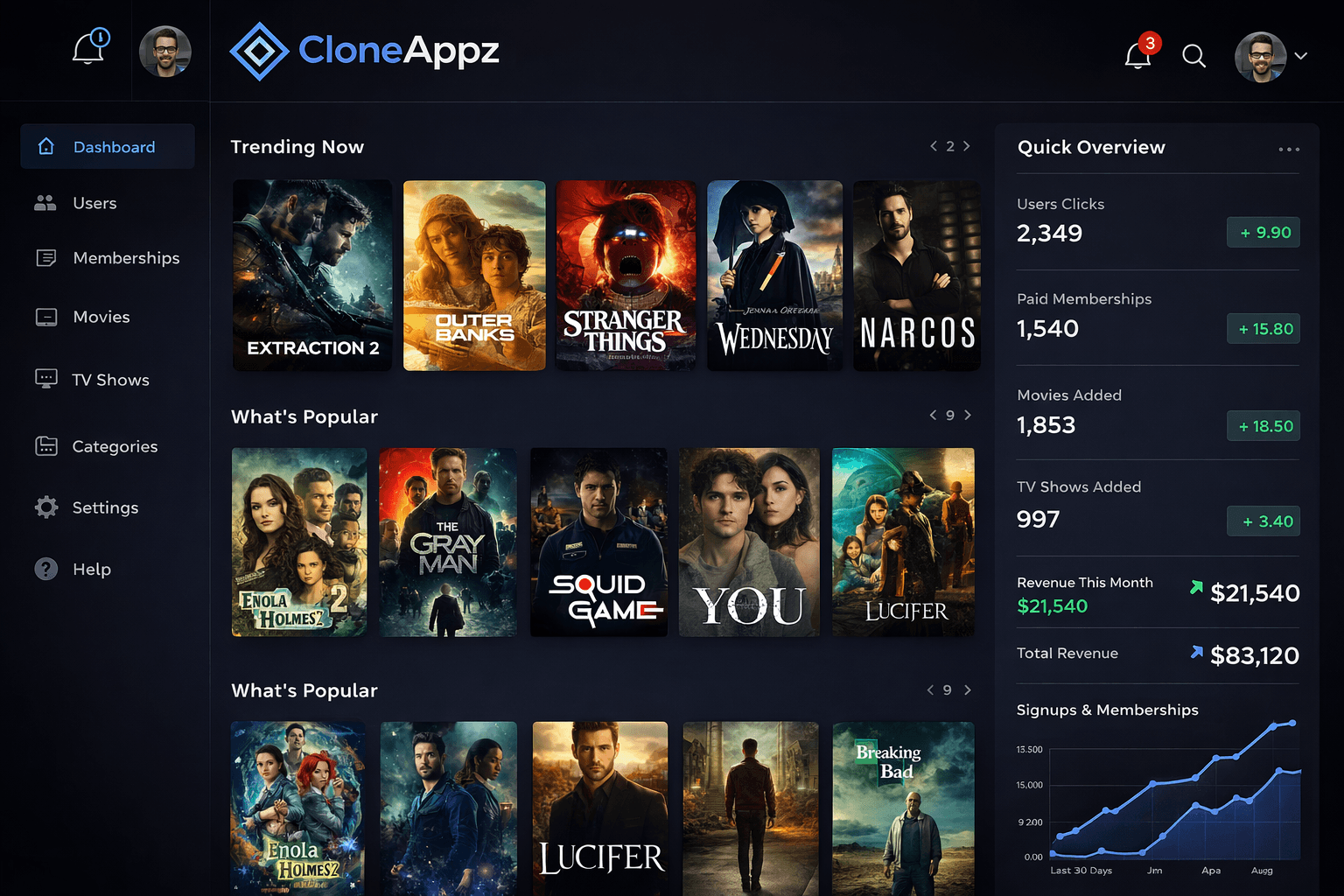
Developing a successful OTT streaming platform requires a well-planned strategy, advanced technology infrastructure, and a structured development process. Businesses planning to build an app like Netflix must focus on user experience, scalable architecture, secure content delivery, and efficient platform management.
A professional Netflix clone app development process involves multiple stages, starting from market research to final deployment. Each stage ensures that the platform is optimized for performance, scalability, and user engagement.
Below is a detailed step-by-step guide to develop an app like Netflix.
Step 1: Market Research and Business Strategy
Before starting development, businesses must conduct comprehensive market research to understand their target audience, competition, and content strategy. This step plays a crucial role in defining the platform’s core vision and revenue model.
Key factors to analyze during this stage include audience preferences, regional streaming trends, and content licensing opportunities. Businesses should also decide whether they will focus on niche content, regional entertainment, or global streaming services.
A clear business strategy helps companies choose the right monetization model, such as subscription-based streaming, advertisement-supported content, or hybrid monetization strategies.
Step 2: Platform Planning and Feature Identification
Once the business strategy is defined, the next step is to outline the core features and functionalities required for the OTT platform. This stage determines how users will interact with the platform and how administrators will manage content.
A typical Netflix clone platform includes user profile management, advanced search functionality, recommendation systems, subscription management, and content categorization.
Planning these features in advance helps development teams design a scalable architecture and define technical requirements.
Step 3: UI/UX Design for Seamless Streaming Experience
User experience plays a critical role in the success of streaming platforms. A well-designed interface ensures users can easily browse content, discover new shows, and enjoy uninterrupted streaming.
During the design phase, developers create intuitive layouts for the Netflix clone website, mobile applications, and smart TV interfaces. The design must prioritize simplicity, fast navigation, and engaging visual presentation.
Key design elements include content thumbnails, categorized media libraries, watchlists, and personalized recommendation sections.
Step 4: Backend Development and Content Management System
The backend infrastructure forms the foundation of the OTT platform. It manages video processing, content storage, user authentication, subscription management, and data analytics.
A robust backend system ensures that the platform can support thousands or even millions of concurrent users without performance issues.
The content management system (CMS) enables administrators to upload videos, manage metadata, organize content categories, and control platform operations.
This stage is crucial for businesses looking to implement scalable Netflix clone development solutions.
Step 5: Frontend Development for Web and Mobile Apps
Frontend development focuses on building the user-facing interface of the platform. Developers create responsive applications for web browsers, Android devices, and iOS devices to ensure seamless multi-device streaming.
Modern frameworks such as React are commonly used to build high-performance interfaces like a Netflix React clone or advanced Netflix clone frontend architecture.
Frontend development ensures that the platform delivers smooth navigation, fast loading times, and visually engaging streaming experiences.
Step 6: Streaming Infrastructure and Video Processing
Streaming infrastructure is one of the most technically complex aspects of OTT platform development. It involves video encoding, adaptive bitrate streaming, and global content delivery.
Videos are processed through encoding systems that convert media into multiple formats compatible with various devices and network conditions.
Content Delivery Networks (CDNs) are implemented to distribute video content across global servers, ensuring fast and buffer-free streaming for users worldwide.
This infrastructure is essential when businesses create an app like Netflix that supports high-definition streaming.
Step 7: Payment Gateway and Subscription Integration
To monetize the platform effectively, businesses must integrate secure payment gateways and subscription management systems.
These systems allow users to purchase subscription plans, upgrade memberships, and manage billing cycles. Payment gateways must support multiple payment options such as credit cards, digital wallets, and international payment systems.
A well-designed subscription system improves revenue generation and simplifies financial management.
Step 8: Testing, Optimization, and Quality Assurance
Before launching the OTT platform, developers conduct extensive testing to ensure that the application functions smoothly across all devices and operating systems.
Testing includes performance testing, security testing, streaming quality checks, and user interface validation.
Optimization ensures that the platform can handle high traffic loads without buffering issues or server failures.
Step 9: Deployment and Platform Launch
The final stage involves deploying the platform on production servers and launching it to the public. Businesses typically host their OTT platforms on scalable cloud infrastructure such as AWS or Google Cloud.
After launch, companies must continuously monitor platform performance, user engagement, and system stability.
Regular updates and feature enhancements ensure that the platform remains competitive in the rapidly evolving OTT streaming market.
Technology Stack for Netflix Clone App Development
Building a scalable OTT streaming platform requires a robust and modern technology stack capable of handling high traffic, seamless video delivery, and smooth user interactions. When businesses invest in Netflix clone app development, selecting the right technologies becomes crucial for ensuring performance, security, and long-term scalability.
Below is an overview of the essential technologies used to build an app like Netflix.
Development Layer | Technologies |
Frontend | React, Angular |
Mobile Apps | Swift, Kotlin, Flutter |
Backend | Node.js, Python, Java |
Database | MongoDB, PostgreSQL |
Cloud Infrastructure | AWS, Google Cloud |
Streaming Protocols | HLS, MPEG-DASH |
CDN | Cloudflare, Akamai |
Developers often build a Netflix React clone to create a fast and scalable web streaming interface.
How Much Does the Cost of Netflix Clone App Development?
The cost of building a video streaming platform can vary significantly depending on the complexity of the application, the number of features included, the supported platforms, and the development approach. Businesses planning to build an app like Netflix must consider several technical and operational factors that influence the overall development budget.
At CloneAppz, we offer flexible and cost-effective Netflix clone app development solutions designed for startups, media companies, and digital entrepreneurs looking to launch their own streaming platforms quickly.
The typical cost of Netflix clone development ranges between $6,000 and $30,000, depending on the features, customization level, and supported platforms.
Development Component | Estimated Cost |
UI/UX Design | $1,000 – $3,000 |
Frontend Development | $1,500 – $5,000 |
Backend Development | $2,000 – $8,000 |
Mobile App Development | $2,000 – $8,000 |
Streaming Infrastructure Setup | $1,000 – $6,000 |
Estimated Total Cost: $6,000 – $30,000+
This cost range typically includes the development of a Netflix clone website, mobile applications, and the backend infrastructure required to manage streaming content.
Why Choose CloneAppz for Netflix Clone App Development?
Choosing the right clone app development company is crucial when planning to create an app like Netflix. A reliable development company ensures that your OTT platform is scalable, secure, and equipped with advanced streaming features. CloneAppz specializes in Netflix clone app development, helping startups and enterprises launch powerful OTT streaming platforms with modern technologies and customized solutions.
Customizable Netflix Clone Solutions
CloneAppz provides fully customizable Netflix clone script solutions that allow businesses to modify platform features, design, and functionality based on their business goals. Whether you want to launch a niche streaming platform or a large-scale OTT service, our solutions can be tailored to meet your requirements.
Scalable OTT Platform Development
We build streaming platforms with scalable architecture to handle growing user traffic. Our Netflix clone website and mobile applications are designed to support high-quality video streaming without buffering or performance issues.
Multi-Platform Compatibility
CloneAppz develops OTT platforms that work seamlessly across multiple devices, including Android, iOS, web browsers, and smart TVs. This ensures that users can access your platform anytime and from any device.
Advanced Streaming Features
Our OTT platforms include powerful features such as AI-based content recommendations, personalized watchlists, advanced search filters, and secure payment integrations. These features help businesses develop an app like Netflix with a premium user experience.
Faster Development and Deployment
With our ready-to-launch Netflix clone development solutions, businesses can significantly reduce development time and enter the streaming market faster while maintaining high-quality platform performance.
End-to-End Development Support
CloneAppz offers complete development support, including platform planning, design, development, testing, deployment, and post-launch maintenance to ensure long-term platform success.
Conclusion
The OTT streaming industry presents enormous opportunities for businesses seeking to enter the digital entertainment market. By investing in Netflix clone app development, entrepreneurs and media companies can launch scalable streaming platforms capable of attracting global audiences.
With the right features, monetization strategies, and technology stack, businesses can successfully create an app like Netflix and build profitable streaming platforms.
Partnering with an experienced development company like CloneAppz ensures faster development, scalable infrastructure, and enterprise-grade streaming solutions.
Build the Next Big Streaming Platform
Create a powerful OTT platform with our customizable Netflix clone script and advanced streaming features.