PayPal Clone App Development: Launch Your Own Global Payment Platform
Build a secure PayPal clone app with digital wallet, P2P payments, and global transactions. Launch your fintech platform with a scalable PayPal clone script.
By CloneAppz Team18 min read
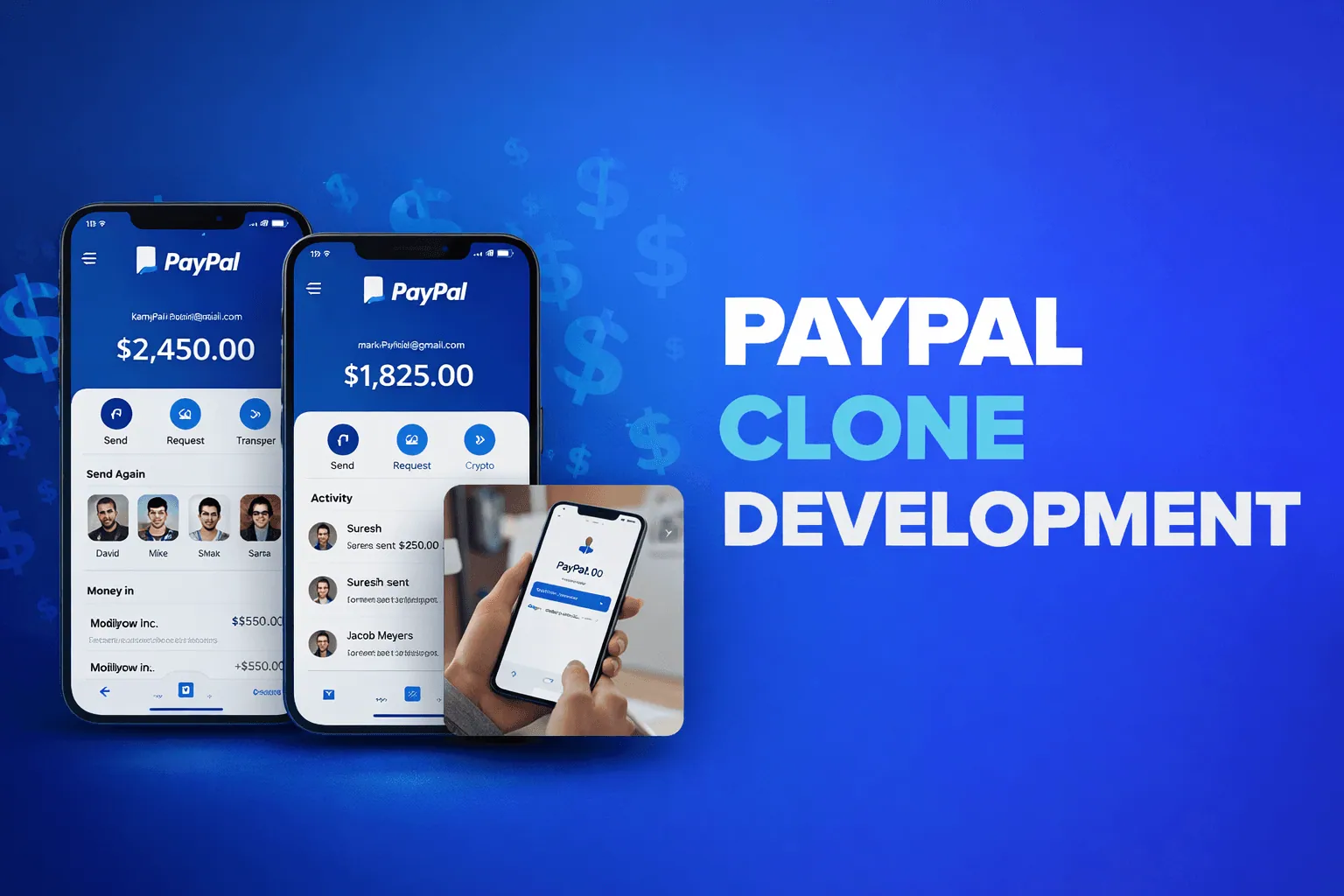
In today’s digital-first economy, seamless online payments are the backbone of ecommerce, fintech services, and global business operations. Consumers and businesses expect instant money transfers, secure transactions, and the ability to send or receive payments across borders with minimal friction. Digital wallet platforms have transformed how financial transactions occur, enabling users to manage payments, subscriptions, and online purchases through a single application.
This transformation has opened a major opportunity for fintech startups and enterprises to build an app like PayPal and enter the rapidly expanding digital payments market. A well-designed payment platform not only simplifies financial transactions but also unlocks multiple revenue opportunities through transaction fees, subscriptions, and value-added services.
However, launching a competitive payment platform requires more than basic wallet functionality. Businesses planning PayPal clone app development must implement secure transaction architecture, scalable financial infrastructure, fraud detection systems, and global payment integrations.
At CloneAppz, we help startups and enterprises develop an app like PayPal with scalable fintech architecture, enterprise-level security, and a monetization-ready ecosystem.
Growing Global Demand for PayPal-Like Payment Platforms
The digital payments industry has witnessed exponential growth as online commerce, mobile banking, and fintech innovations continue to reshape financial ecosystems. Platforms like PayPal have demonstrated how a secure digital wallet combined with global merchant support can scale into a multi-billion-dollar fintech ecosystem.
Businesses exploring PayPal clone development can leverage this growing demand to launch their own payment platforms serving niche markets, regional economies, or industry-specific payment solutions.
Several key factors are driving this demand:
- The global digital payments market is expected to exceed $20 trillion in transaction value by 2026, driven by ecommerce expansion and mobile wallet adoption.
- Online merchants increasingly prefer digital wallets due to faster checkout and reduced payment friction.
- Cross-border commerce is growing rapidly, creating demand for secure international payment platforms.
- Subscription-based digital services require integrated payment processing and automated billing systems.
- Fintech innovation has accelerated demand for custom payment platforms built with PayPal-like functionality.
As a result, startups and enterprises are actively investing in PayPal clone website and app development to create scalable digital payment ecosystems.
Scalable System Architecture for a PayPal Clone Platform
To successfully build an app like PayPal, businesses must implement a robust and secure fintech architecture capable of handling millions of transactions, payment processing workloads, and compliance requirements.
Below are the critical architectural components required for scalable PayPal clone development.
Secure Digital Wallet Infrastructure
A PayPal clone app must include a secure digital wallet system that allows users to store funds, link bank accounts, and manage payment balances. The wallet system should support encrypted transaction records and multi-layer security validation to ensure safe financial operations.
Real-Time Payment Processing Engine
A reliable payment processing system ensures instant transaction validation and settlement between users, merchants, and financial institutions. Businesses planning to develop an app like PayPal must integrate payment gateways, transaction ledgers, and reconciliation mechanisms.
Microservices-Based Backend Architecture
Modern fintech applications rely on microservices architecture to maintain scalability and reliability. Separate modules for authentication, transaction processing, fraud monitoring, and notifications ensure high availability and performance.
Global Payment Gateway Integration
To support international payments, a PayPal clone website should integrate with multiple payment gateways and banking APIs. This infrastructure enables seamless cross-border payments, currency conversion, and merchant settlement.
Fraud Detection and Risk Management System
A strong fraud prevention system is essential when developing a PayPal clone. AI-powered fraud detection algorithms analyze transaction patterns and flag suspicious activities in real time, protecting users and merchants from financial threats.
Revenue-Focused Monetization Models for PayPal Clone Apps
When businesses create an app like PayPal, monetization must be integrated into the platform architecture from the beginning. A diversified revenue strategy ensures sustainable growth and long-term fintech valuation.
Transaction Processing Fees
One of the most reliable revenue models for a PayPal clone app is charging a small percentage for each transaction processed through the platform.
Key benefits include:
- Predictable revenue growth
- Scalable income with transaction volume
- Minimal friction for users and merchants
Merchant Service Fees
Online businesses and ecommerce platforms often pay service fees for payment gateway integration, payment analytics, and merchant account management.
This model allows fintech platforms to generate B2B revenue from merchants and enterprise clients.
Currency Conversion Charges
For cross-border transactions, platforms can apply a currency conversion margin. International payment processing provides a strong revenue channel for global fintech platforms.
Subscription-Based Premium Accounts
Advanced features such as:
- Business analytics dashboards
- Recurring billing tools
- priority transaction processing
- advanced fraud monitoring
can be offered under premium subscription plans.
In-App Financial Services
Fintech platforms can expand monetization through:
- digital lending services
- installment payment systems
- invoice management tools
- business financial dashboards
These services transform a PayPal clone website into a full financial ecosystem.
Essential Features of a Successful PayPal Clone App
A modern digital payment platform must provide fast, secure, and reliable transactions for individuals and businesses. When businesses build a PayPal clone app, the focus should be on seamless payments, strong security, and scalable infrastructure that can support high transaction volumes. A well-structured PayPal clone solution should include essential wallet features, merchant payment tools, and global transaction capabilities to deliver a smooth digital payment experience.
Secure User Registration and Verification
User onboarding should be simple but secure to protect financial data and prevent fraud. Identity verification also helps platforms meet regulatory compliance requirements.
Important capabilities include:
- Email and mobile registration
- Two-factor authentication
- KYC identity verification
- Biometric login support for mobile apps
- Secure password and authentication systems
These features help ensure that only verified users can access the platform.
Digital Wallet System
The digital wallet acts as the core component of a PayPal clone platform. It allows users to manage funds and perform transactions within the application.
Key wallet functionalities include:
- Store and manage digital balance
- Add and withdraw funds
- Link bank accounts and payment cards
- View wallet balance in real time
- Track transaction history
A reliable wallet system ensures smooth payment processing for users.
Peer-to-Peer Money Transfers
Peer-to-peer payments allow users to send and receive money instantly. This feature improves convenience and increases platform engagement.
Core P2P capabilities include:
- Instant money transfers between users
- Send money using email or phone number
- Request payments from other users
- QR code payments for quick transfers
- Transaction notes and references
This functionality is essential for everyday digital payments.
Multi-Currency Payments
Supporting multiple currencies enables global transactions and cross-border payments. This feature is important for platforms targeting international users.
Key capabilities include:
- Multi-currency wallet support
- Automatic currency conversion
- Cross-border transactions
- International payment processing
- Currency management options
These features allow users to send and receive payments globally.
Merchant Payment Support
A payment platform should also support businesses that want to accept online payments. Merchant tools help expand the platform’s ecosystem.
Important merchant features include:
- Payment gateway integration
- Checkout payment processing
- Invoice generation
- Payment request tools
- Merchant transaction dashboards
This allows businesses to accept payments directly through the platform.
Transaction Notifications
Real-time notifications keep users informed about payment activity and account updates.
Notification features include:
- Payment confirmation alerts
- Money received notifications
- Failed transaction alerts
- Account activity updates
- Push and email notifications
These updates improve transparency and user experience.
Transaction History
Users should be able to track and manage their financial activity easily.
Key tracking features include:
- Complete transaction records
- Payment details and timestamps
- Search and filter transactions
- Downloadable statements
- Payment tracking tools
Clear transaction records help users manage their payments efficiently.
Admin Dashboard
An admin panel is necessary for managing users, payments, and platform performance.
Admin features typically include:
- User account management
- Transaction monitoring
- Fee and commission management
- Fraud monitoring tools
- Platform analytics and reporting
This helps businesses operate and manage the payment platform effectively.
Advanced Fintech Features That Differentiate a PayPal Clone
To stand out in the competitive fintech market, businesses must integrate advanced financial technologies when developing a PayPal clone.
AI-Powered Fraud Detection
Machine learning models monitor transaction behavior and detect suspicious activities automatically, improving platform security.
Smart Payment Routing
Payment routing systems automatically select the most efficient payment gateway to reduce transaction failure rates and processing costs.
Recurring Billing and Subscription Management
This feature enables SaaS platforms and subscription businesses to automate billing cycles.
Instant Withdrawal and Settlement
Users and merchants can withdraw funds instantly to linked bank accounts or debit cards.
Multi-Currency Wallet Support
Supporting multiple currencies allows businesses to create an app like PayPal that serves international users and merchants.
How Does Our PayPal Clone Work?
A PayPal clone platform is designed to make digital payments simple, secure, and fast for users and businesses. The system works by allowing users to create digital wallets, link payment methods, and transfer money instantly through a secure payment infrastructure. Our PayPal clone solution enables individuals and merchants to send, receive, and manage payments seamlessly through a web or mobile application.
Below is a simple overview of how the platform operates.
Create Your Account
Users begin by registering on the platform using their email address or mobile number. After quick verification, the account is activated, giving users access to their personal payment dashboard.
Set Up Your Digital Wallet
Once the account is active, users can set up their digital wallet. They can link their bank account, debit card, or credit card to add funds and manage their balance directly from the platform.
Add or Withdraw Funds
Users can easily deposit money into their wallet using linked payment methods. The platform also allows users to withdraw funds from their wallet to their bank account whenever needed.
Make Secure Payments
To send money, users simply enter the recipient’s email, phone number, or wallet ID. The system processes the transaction instantly and transfers the funds securely to the receiver’s wallet.
Receive Payments Instantly
Users and businesses can receive payments directly into their wallet. Once a payment is received, the wallet balance updates immediately and users receive a confirmation notification.
Track Transactions and Activity
All payment activities are recorded in the user dashboard. Users can view transaction history, check payment status, and monitor their financial activity in one place.
Step-by-Step Development Roadmap to Build a PayPal Clone App
Launching a digital payment platform like PayPal clone requires a clear development strategy, secure infrastructure, and scalable technology. Businesses planning to build a PayPal clone app must focus on creating a reliable payment ecosystem that supports secure transactions, merchant payments, and global money transfers. A structured development roadmap helps streamline the process and ensures the platform meets performance, security, and compliance requirements.
Step 1: Market Research and Business Planning
The first step in PayPal clone development is understanding the digital payments market and defining the business model. This stage helps identify the target audience, competitors, and revenue opportunities.
Important planning activities include:
- Identifying target users such as individuals, businesses, or merchants
- Analyzing competing digital payment platforms
- Defining transaction fees and revenue streams
- Determining supported payment methods and currencies
Clear planning ensures the platform aligns with market demand and business goals.
Step 2: Define Platform Features and Functional Requirements
Before development begins, businesses must determine the key features required in the application. Defining the functional scope helps guide the design and development teams.
Core functionality usually includes:
- User registration and identity verification
- Digital wallet management
- Peer-to-peer money transfers
- Merchant payment processing
- Multi-currency payment support
- Transaction tracking and notifications
A well-defined feature list helps avoid development delays and scope changes.
Step 3: UI/UX Design and User Journey Mapping
User experience plays a crucial role in digital payment platforms. The interface should make financial transactions simple and intuitive for users.
The design stage typically includes:
- Wireframes for mobile and web interfaces
- Payment flow design for sending and receiving money
- Dashboard layouts for users and merchants
- Admin panel interface design
A well-designed interface improves usability and increases user adoption.
Step 4: Backend Architecture and Payment Infrastructure
The backend infrastructure powers the entire payment platform. It manages transactions, wallet balances, user accounts, and security protocols.
Key backend components include:
- Secure wallet management system
- Payment processing engine
- User authentication and verification modules
- Database for transaction records
- API integration with banking systems
A strong backend ensures stable performance and secure financial operations.
Step 5: Payment Gateway and Banking Integration
Payment gateway integration allows the platform to process transactions between users, banks, and merchants.
Important integrations may include:
- Credit and debit card payment processing
- Bank account linking and withdrawals
- International payment networks
- Currency conversion services
These integrations enable smooth payment processing within the platform.
Step 6: Security Implementation and Compliance
Security is critical for any digital payment platform. Strong protection measures help safeguard financial data and prevent fraud.
Essential security measures include:
- End-to-end data encryption
- Two-factor authentication
- Fraud detection systems
- Secure payment authorization
- Compliance with financial regulations
Implementing these security standards builds trust among users and businesses.
Step 7: Testing and Quality Assurance
Before launching the platform, thorough testing ensures that all features function correctly and securely.
Testing typically includes:
- Functional testing of payment processes
- Security and vulnerability testing
- Performance and load testing
- Mobile and web compatibility testing
Quality assurance helps prevent system failures after launch.
Step 8: Platform Deployment and Launch
Once development and testing are complete, the application is deployed to production environments.
Deployment activities include:
- Hosting setup on cloud infrastructure
- Database deployment and configuration
- Mobile app publishing on app stores
- Web platform launch
A smooth deployment ensures the platform becomes accessible to users without issues.
Step 9: Ongoing Maintenance and Platform Scaling
After launch, continuous monitoring and improvements are necessary to support platform growth and maintain performance.
Post-launch activities include:
- Regular security updates
- Feature enhancements
- Performance monitoring
- Infrastructure scaling for growing users
Ongoing maintenance ensures the platform remains reliable and competitive in the digital payments industry.
How CloneAppz Helps You Build a Scalable PayPal Clone Platform
Building a fintech application requires deep expertise in financial security, payment infrastructure, and scalable cloud architecture. CloneAppz provides businesses with a complete PayPal clone development solution designed for startups, fintech companies, and enterprises.
Ready-Made PayPal Clone App Solution
Our readymade PayPal clone app enables businesses to launch faster with a production-ready payment platform.
Fully Customizable PayPal Clone Script
We provide a scalable PayPal clone script that can be customized with unique branding, features, and payment integrations.
Secure Fintech Architecture
Our platform integrates:
- encrypted transactions
- fraud detection systems
- scalable payment processing infrastructure
to ensure secure financial operations.
Global Payment Gateway Integration
We integrate leading payment gateways and banking APIs to support international transactions.
Monetization-Ready Platform
Our solutions include built-in monetization systems such as:
- transaction fees
- merchant services
- subscription plans
allowing businesses to generate revenue from day one.
Technology Stack Powering a Secure PayPal Clone App
The performance, security, and scalability of a digital payment platform depend heavily on the technologies used during development. When businesses develop an app like PayPal, selecting the right frontend frameworks, backend infrastructure, databases, and security tools is essential for handling large volumes of financial transactions. A well-planned technology stack ensures smooth payment processing, reliable system performance, and secure data management across the entire platform.
Technology Layer | Technologies | Purpose |
Frontend Development | React.js, Angular, Vue.js, HTML5, CSS3, JavaScript | Builds responsive web interfaces and smooth user experiences for payment dashboards and transaction flows |
Mobile App Development | Flutter, React Native, Swift, Kotlin | Enables cross-platform and native mobile apps for Android and iOS payment applications |
Backend Development | Node.js, Python (Django/Flask), Java (Spring Boot), PHP (Laravel) | Handles business logic, payment processing, wallet management, and authentication systems |
Database Management | PostgreSQL, MySQL, MongoDB, Redis | Stores user data, transaction records, wallet balances, and supports real-time data processing |
Payment Gateway Integration | Stripe, PayPal API, Braintree, Adyen | Processes credit cards, debit cards, and online payment transactions securely |
Security Technologies | SSL Encryption, OAuth 2.0, Two-Factor Authentication, Fraud Detection Systems | Protects financial transactions, user authentication, and prevents unauthorized access |
Cloud Infrastructure | AWS, Google Cloud, Microsoft Azure | Provides scalable hosting, data storage, and high availability for payment platforms |
API & Third-Party Integrations | Banking APIs, KYC Verification APIs, Currency Conversion APIs, Notification Services | Enables integration with banks, identity verification services, and external financial systems |
How Much Does It Cost To Launch An App Like Paypal?
Launching a digital payment platform like PayPal can be a profitable opportunity for businesses entering the fintech market. However, building a payment application does not always require a massive investment. The cost of PayPal clone app development depends on several factors such as platform complexity, security requirements, integrations, and the number of features included in the application.
Below are the major factors that influence the cost of building a PayPal-like payment platform.
App Features
The features included in the payment application significantly affect the overall development cost. A basic payment app with limited functionality costs less, while advanced platforms with multiple fintech features require higher development investment.
Core functionalities such as digital wallets, peer-to-peer transfers, and transaction history are typically included in a basic version. Advanced platforms may include merchant payments, multi-currency support, fraud detection, and advanced analytics.
Estimated Cost Based on App Features
- Basic Features:$6,000 – $10,000
- Moderately Complex Features: $10,000 – $20,000
- Advanced Features: $20,000 – $30,000
UI/UX of the App Design
The user interface plays a crucial role in digital payment applications. A simple and minimal interface requires less development effort, while a fully customized UI with advanced user experience elements can increase development costs.
Well-designed dashboards, smooth payment flows, and user-friendly navigation help improve user engagement and overall platform usability.
Estimated Cost Based on App Design
- Basic Design: $6,000 – $12,000
- Custom UI/UX Design: $12,000 – $20,000
Type of Platform
The platform you choose for launching your payment application also affects the overall cost. Developing an application for a single platform requires fewer resources compared to building apps for both Android and iOS.
Many startups begin with one platform and expand later as the platform grows.
Estimated Cost Based on Platform
- Single Platform (Android or iOS): $8,000 – $18,000
- Both Platforms (Android + iOS): $18,000 – $30,000
Security and Payment Integration
Payment applications require advanced security systems and integrations with payment gateways and banking networks. Implementing security layers such as encryption, identity verification, and fraud prevention adds to the development effort.
These integrations ensure safe financial transactions and regulatory compliance.
Estimated Cost for Security and Payment Integration: $5,000 – $10,000
App Testing and Maintenance
Testing is an important stage in fintech application development. It involves checking the platform for bugs, security vulnerabilities, and performance issues before launch.
Ongoing maintenance is also required to ensure the application remains secure and updated with new features.
Estimated Cost for App Testing and Maintenance: $3,000 – $8,000
Why Choose CloneAppz for PayPal Clone Development
Launching a successful fintech platform requires a technology partner with expertise in digital payments, cloud infrastructure, and financial security.
Ready-to-Deploy PayPal Clone Website and App
Our solution allows businesses to launch a PayPal clone website and mobile app quickly with minimal development time.
Customizable PayPal Clone Codes
We provide scalable PayPal clone codes that can be customized to support unique payment workflows and integrations.
Secure and Scalable Payment Infrastructure
Our platform is built with enterprise-grade security systems and scalable architecture to support high transaction volumes.
Faster Time-to-Market
Our readymade PayPal clone app significantly reduces development time, enabling businesses to launch their fintech platforms faster.
Long-Term Technical Support
We provide ongoing updates, feature enhancements, and technical support to ensure platform scalability.
Conclusion
Digital payment platforms have become essential infrastructure for modern businesses and online commerce. Companies that build an app like PayPal can unlock new fintech opportunities by enabling seamless transactions, global payment capabilities, and scalable financial services.
Through strategic PayPal clone development, startups and enterprises can create powerful payment ecosystems that support ecommerce, peer-to-peer transfers, and business transactions.
CloneAppz helps businesses create an app like PayPal with secure architecture, customizable features, and monetization-ready fintech solutions designed for long-term growth.
If you’re planning PayPal clone app development, now is the perfect time to launch your own global payment platform and capture the growing digital payments market.
Frequently Asked Questions
01What is a PayPal clone app?
A PayPal clone app is a digital payment platform designed to replicate the core functionality of PayPal, allowing users to send and receive money, store funds in a digital wallet, and make secure online payments. Businesses use a PayPal clone script to launch their own fintech platform with customizable features, payment integrations, and branding. This type of platform enables startups and enterprises to enter the digital payments market quickly while offering services similar to leading payment applications.
02How long does it take to develop a PayPal clone app?
The time required for PayPal clone app development depends on the complexity of the platform and the number of features included. A basic minimum viable product with essential wallet and payment features may take around four to six weeks to develop. A mid-level platform with advanced integrations and security features can take six to ten weeks, while a fully scalable fintech platform with enterprise-level infrastructure may require up to sixteen weeks. Using a readymade PayPal clone app can significantly reduce the overall development timeline.
03What features are required to build an app like PayPal?
To build an app like PayPal, the platform must include several essential fintech features that ensure secure and seamless transactions. These include user registration and identity verification, digital wallet management, instant peer-to-peer payments, payment gateway integrations, merchant payment support, transaction history, and multi-currency payment capabilities. Security features such as fraud detection systems and encrypted transaction processing are also critical for maintaining trust and compliance in financial applications.
04Can a PayPal clone script be customized?
Yes, a PayPal clone script can be fully customized to meet specific business requirements. Companies can modify the platform’s interface, branding, payment workflow, and integrations with banks or payment gateways. Customization also allows businesses to add unique features, implement specific monetization models, and design a platform that targets a particular market segment while maintaining the core functionality of a digital payment system.
05How does a PayPal clone platform generate revenue?
A PayPal clone platform can generate revenue through multiple monetization models built into the payment ecosystem. Most platforms earn income by charging a small transaction processing fee whenever users send or receive money. Additional revenue streams can include merchant service fees, currency conversion charges for international payments, subscription plans for advanced business tools, and value-added financial services such as invoicing or payment analytics. These revenue strategies help build a sustainable fintech platform.
06Is a PayPal clone app secure for financial transactions?
A properly developed PayPal clone app is built with strong security systems to protect user data and financial transactions. These platforms typically use end-to-end encryption, multi-factor authentication, secure payment gateway integrations, and real-time fraud detection mechanisms. These security layers ensure that all transactions are processed safely while protecting the platform from potential cyber threats and fraudulent activities.
07Can a PayPal clone support international transactions?
Yes, businesses can create an app like PayPal that supports international payments and cross-border transactions. By integrating multi-currency wallets, currency conversion systems, and global payment gateway APIs, the platform can allow users to send and receive money worldwide. This capability is essential for businesses targeting global ecommerce markets and international customers.
08Why should businesses invest in PayPal clone app development?
Businesses invest in PayPal clone app development because digital payments are rapidly becoming the standard for online commerce and financial services. Launching a payment platform allows companies to enter the growing fintech market and offer secure transaction services to individuals and merchants. With the right infrastructure and monetization strategies, a PayPal clone can evolve into a scalable financial ecosystem that supports peer-to-peer payments, merchant transactions, and international financial services.